
Reviewed · AQABA TOURS
Wadi Rum: Camel Trek Adventure
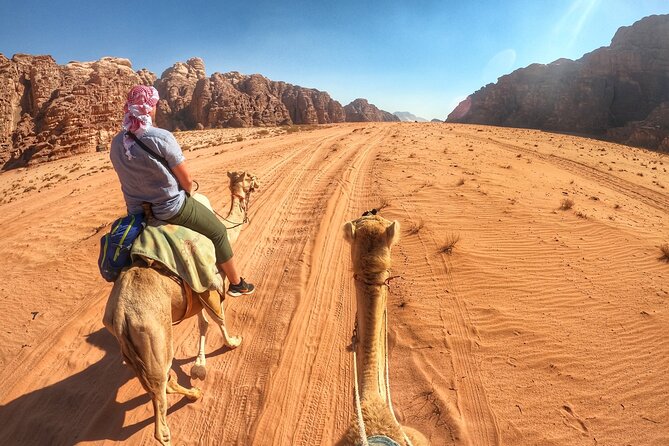
Wadi Rum is best understood slowly, from the back of a camel, with orange sand underfoot and enormous red rock walls ahead. This private trek follows a traditional Bedouin route through the protected area, with stops at Lawrence Spring, the Red Sand Dune, and Khazali Canyon.
I like the small private format, which lets you ride at your own pace instead of being tied to a large group. I also like that the camels are described as healthy and well cared for, with Bedouin guides handling the animals without whips or chains. The main caution is physical comfort: even a three- to four-hour ride can leave your legs and back sore, especially if you rarely ride animals.
Key points to know before you book
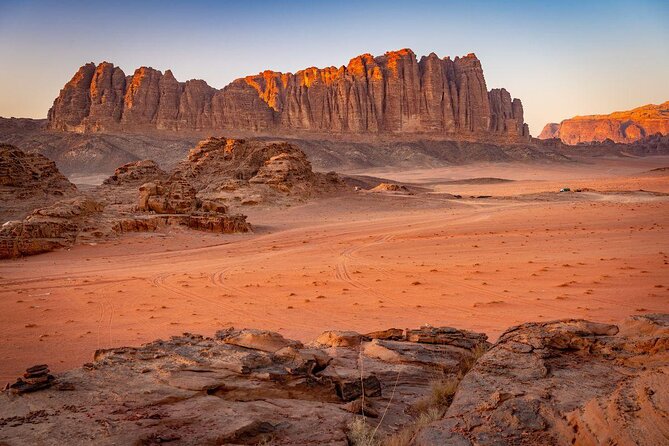
- Lawrence Spring and Khazali Canyon: The route links two of Wadi Rum’s most recognizable stops, including ancient inscriptions in the canyon.
- Private group only: Your party rides with its own guide, so the outing can move at a comfortable pace.
- Traditional camel travel: This is a quiet way to see the desert, not a fast sightseeing circuit.
- Bottled water included: Still, bring sun protection and more water if you need it for a long outing.
- Wadi Rum entrance fee extra: Pay 7 JD per adult at the Visitor Centre, unless your Jordan Pass covers it.
- Flexible morning or afternoon route: The exact order and timing of stops change with your start time.
Why camelback works so well in Wadi Rum
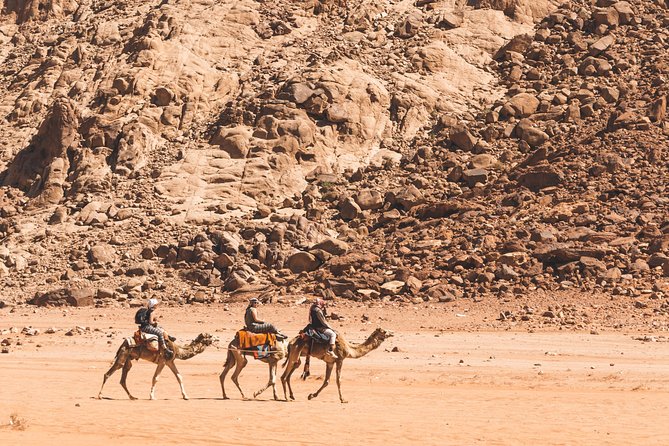
Wadi Rum can feel almost too large to take in from a vehicle. A jeep covers more ground, but a camel gives you time to notice the silence, the changing colors of the sand, and the way the rock formations appear and disappear as you move through the valleys.
The pace is gentle. You rise and fall with the camel’s stride, crossing broad orange sand valleys beneath walls of sandstone and granite. This is not a polished attraction with a fixed show. It is a simple desert ride guided by local Bedouins, and that simplicity is part of its appeal.
The experience is also a useful contrast to a standard jeep tour. A vehicle is practical for reaching distant sites, while a camel lets you experience the desert as an old route rather than as a series of quick photo stops. You will not cover every corner of Wadi Rum in three or four hours, but you get a more restful view of the desert.
More Hiking Tours in Aqaba
- Full Day Desert Tour, Jeep & Hiking
★ 5.0 · 98 reviews - Camping and Hiking Adventure : Discovering the south
★ 5.0 · 17 reviews - Wadi Rum: Mountain Hike with Lunch & Scenic Valley Tour
★ 5.0 · 13 reviews
Meeting at Wadi Rum Rest House
The starting point is Wadi Rum Rest House in Wadi Rum Village. This makes the beginning fairly easy: you meet the guide there, receive directions to the camels, and set out into the protected area.
The local operator is Wadi Rum Desert Eyes. Khaled handles communication for the company, and the wider team includes Bedouin guides such as Muhammad and Ibrahim on different routes. Your specific guide is not guaranteed by the booking details, but the tour is designed around a local guide who leads the convoy and chooses the route.
The meeting point matters because Wadi Rum is not the sort of place where you should wander off looking for a camel pickup. Stay close to the agreed meeting location and allow enough time to find the Rest House. A mobile ticket is provided, and confirmation comes at booking.
The camel ride: a slow route through orange sand valleys
Once you reach the camels, expect a short period of getting settled and learning how to mount safely. The animals are large, so the guide will need to manage the moment when they stand. Follow instructions carefully and avoid trying to rush the process.
The camels used by this operator have been described as gentle, strong, healthy, and well looked after. That is important. Camel welfare changes the entire mood of the ride, and a calm animal makes it easier for you to relax and enjoy the scenery.
The ride follows a traditional convoy. You will move behind or near the guide rather than choosing your own route. That is sensible in Wadi Rum, where the rock walls and valleys can make directions confusing. It also leaves you free to take photographs without constantly checking where to go next.
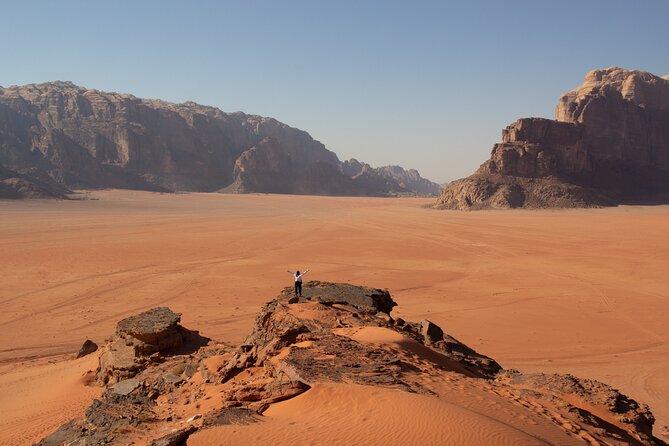
The views are the main event. Expect orange sand, open valleys, sharp rock faces, and isolated formations shaped by wind and water. The quiet is striking. You hear the camel’s steps and the guide’s directions more than the sounds of engines, at least during the riding portions.
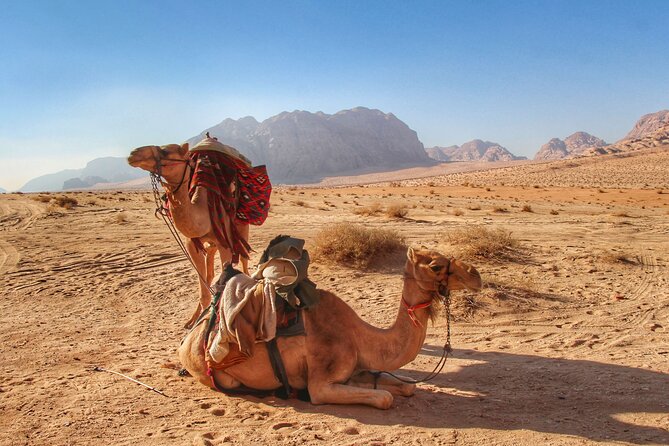
Take photographs of the camels as well as the scenery. Their shapes against the red sand make strong pictures, especially when the group is framed by a tall rock wall. Ask the guide before stopping for a longer photo session, since the private format makes this easier than a fixed group tour.
Lawrence Spring and the start of the route
One of the named route points is Ain Abu Aineh, commonly known as Lawrence Spring. It is linked with T. E. Lawrence, the British officer whose time in the region helped make Wadi Rum famous to Western audiences.
The value of the stop is not only the name. It gives you a clear point of reference in a huge desert, with rocky slopes, sand, and a sense of how water shaped movement through the area. The route may begin here before continuing toward the Red Sand Dune, although the order can change between morning and afternoon departures.
Do not expect a long guided lecture based on the information provided. The guide leads the route and stops at the major sites, but the depth of explanation may depend on the individual guide and your questions. If you want more context, ask directly about the spring, the route, and local Bedouin use of the desert.
More Wadi Rum desert trips:
- Wadi Rum Full Day Jeep Tour + Overnight & Dinner in Bedouin Camp
★ 5.0 · 368 reviews - Wadi Rum: Morning or Sunset Jeep Tour
★ 5.0 · 285 reviews - Wadi Rum Cave Camping with Jeep Tour
★ 5.0 · 200 reviews - Wadi Rum: Bedouin Camp Stay,Full-Day Desert Tour with 3Meals
★ 4.9 · 198 reviews
Red Sand Dune and Wadi Rum’s changing colors
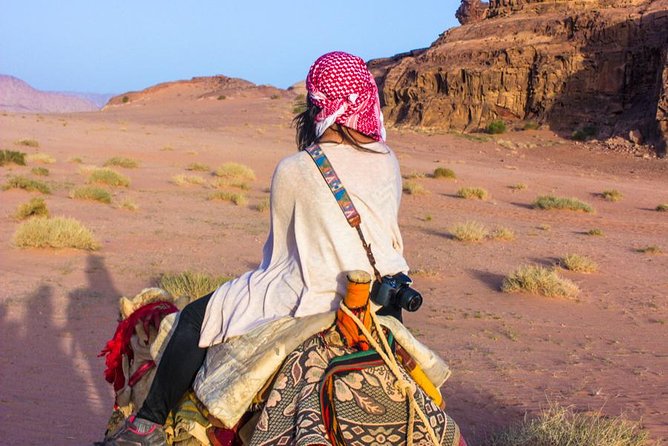
The Red Sand Dune is one of the most photogenic stops on the trek. The sand here takes on a stronger red and orange tone, particularly when the sun is lower. This is one reason the start time matters.
A morning ride gives you cooler conditions and clearer early light. An afternoon ride may bring warmer temperatures but can offer softer light as the day progresses. The route information says the itinerary varies by morning or afternoon departure, so you should confirm the preferred start time when booking.
The dune is also a reminder that camel riding is not simply sitting and looking around. You are balancing on a moving animal, and the saddle can put pressure on your legs. If you are not used to riding, the first hour may feel fine while the later sections become tiring.
Wear practical clothing rather than anything delicate. Long trousers help protect your legs from the saddle and the sun. Secure loose belongings, use sunscreen, and bring a hat if you have one. Bottled water is included, but desert heat can make you drink more than expected.
Khazali Canyon and ancient inscriptions
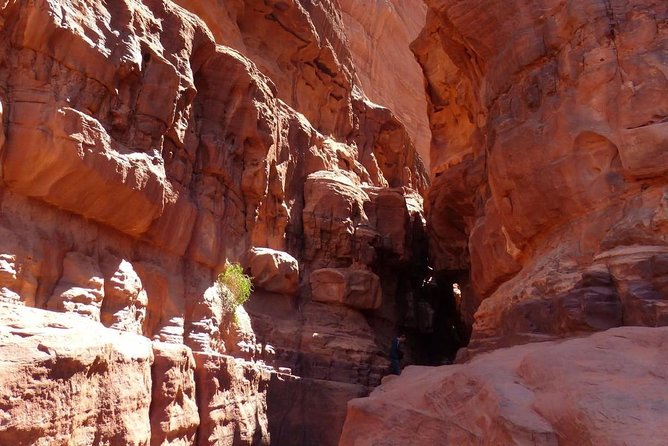
Khazali Canyon is another major stop. This narrow cleft in the rock is known for ancient petroglyphs and inscriptions. It gives the ride a cultural layer that a simple scenic route would lack.
You will leave the camel for at least part of the stop and walk into the canyon area. The physical demand is generally different from riding, but the tour does require a moderate level of fitness. Uneven ground, heat, and the need to mount and dismount all add up.
The inscriptions are valuable because they show that Wadi Rum was not an empty wilderness. People have crossed, used, and marked these routes for centuries. Look closely rather than rushing through for one photograph. The canyon’s narrow walls also offer a welcome break from direct sun.
The supplied itinerary names Lawrence Spring, the Red Sand Dune, and Khazali Canyon, while additional route descriptions refer to small and large rock bridges. The exact stops are not fixed for every departure, so treat the listed points as likely highlights rather than a guaranteed minute-by-minute schedule.
What three to four hours feels like
The advertised experience lasts about three to four hours. That is long enough to make the desert feel like more than a quick animal ride, but short enough to fit into a larger Jordan itinerary.
You will have time to ride between several major points, stop for photographs, and see the desert from ground level. You should not expect a full-day expedition, extensive hiking, or an overnight camp as part of this particular booking. Some Desert Eyes programs run for a full day or several nights, but those are separate experiences.
There is one confusing detail in the supplied timing: the itinerary line lists eight hours while the tour summary and main description state approximately three to four hours. I would treat three to four hours as the intended duration, but confirm this directly before paying, especially if you have a tight connection, a hotel transfer, or an afternoon plan.
After the trek, the activity ends back at the meeting point. The rest of your day is free, which makes this a practical choice for combining with other time in Wadi Rum or Aqaba.
Private touring and the value of $91
At $91 per person, this is not the cheapest way to take a short ride in Jordan. The price makes more sense if you value a private guide, a planned route through the protected area, and the chance to move at your own pace.
A large group can lower the cost, but it can also mean waiting for slow riders, limiting photo stops, and following a fixed timetable. With a private party, you can ask for a slower rhythm, spend more time at a site, or keep moving if the saddle becomes uncomfortable.
The fee does not include the Wadi Rum entrance charge. You pay 7 JD per adult at the Visitor Centre, or nothing extra if you have a Jordan Pass that covers admission. Add that cost when comparing the tour with other camel rides or jeep excursions.
Bottled water is included, which is useful but not a complete desert packing plan. The value is strongest for couples, families, or friends who want personal attention without committing to a full-day or overnight trek.
Physical comfort, safety, and camel welfare
Camel riding is often sold as effortless. It is not. The camel does the walking, but your body still has to balance for several hours. Sore legs are possible, and longer rides can be painful if you have little experience riding animals.
The description asks for moderate physical fitness. That should be taken seriously. You need to mount and dismount, sit upright, tolerate heat, and walk around stops such as Khazali Canyon. If you have back, hip, or knee problems, ask the provider whether the ride suits you before booking.
The animal-care details are encouraging. The camels are described as healthy, gentle, and well looked after, and the ride is handled without whips or chains. You can help by following the guide’s directions, avoiding sudden movements, and treating the animals calmly.
English-speaking Bedouin guides have led longer Desert Eyes routes, and the short trek is also guided rather than self-directed. The private setup means your group is the only group participating in the activity, not that you ride without supervision.
Best time to choose this experience
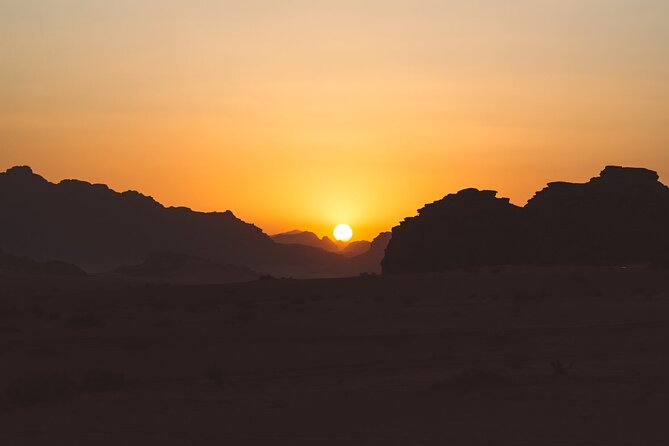
Choose a morning departure if you want to avoid the strongest heat and prefer early desert light. Choose an afternoon departure if you want the possibility of warmer sunset tones, although a sunset ride is not specifically promised by this booking.
The company has also operated shorter sunset rides and longer overnight camel trips, but do not assume those features are included here. Confirm the start time and route when you book.
The desert sun can be strong even when the air feels cool. Bring sun protection, wear sensible clothing, and keep your water accessible. Take photographs during stops rather than trying to handle a phone constantly while the camel is moving.
Who should book the camel trek
I would recommend this for someone who wants an authentic-feeling desert outing but does not have time for a full-day trek or overnight camp. It is also a good match if you prefer quiet travel, local guiding, and a private schedule.
Couples and small groups gain the most from the format. You can share the ride with people you know, pause for photographs, and ask questions without a large party around you.
It is less suitable if you dislike animal riding, need a very soft seat, or want to see the greatest possible number of Wadi Rum sites in one day. A jeep trip will cover more distance, while a longer camel trek will offer a stronger connection to Bedouin travel but require much more stamina.
Should you book Wadi Rum Camel Trek Adventure?
Book it if you want to experience Wadi Rum at a quiet pace, with a private Bedouin guide and well-cared-for camels. Lawrence Spring, the Red Sand Dune, Khazali Canyon, ancient inscriptions, and enormous rock formations give the short outing plenty of variety.
Before booking, confirm the actual duration because the supplied timing includes both a three-to-four-hour description and an eight-hour itinerary entry. Also budget for the 7 JD entrance fee unless your Jordan Pass covers it.
For a first visit to Wadi Rum, this is a good middle ground: more personal than a quick group ride, less demanding than a full-day camel trek, and much shorter than an overnight desert journey.
FAQ
How long does the camel trek last?
The advertised duration is approximately three to four hours. One itinerary line lists eight hours, so confirm the exact timing with the provider before booking.
Where does the tour begin?
The tour begins at Wadi Rum Rest House in Wadi Rum Village, Jordan.
Where does the tour end?
The activity ends back at the meeting point, Wadi Rum Rest House.
Is this a private tour?
Yes. Only your group participates in the private activity.
What sites can the route include?
The route can include Lawrence Spring, the Red Sand Dune, Khazali Canyon, ancient petroglyphs and inscriptions, and rock formations. The itinerary varies between morning and afternoon departures.
Is the Wadi Rum entrance fee included?
No. The entrance fee is 7 JD per adult at the Visitor Centre, or free with the Jordan Pass.
Is bottled water included?
Yes. Bottled water is included in the tour.
Do I need a certain fitness level?
A moderate physical fitness level is required. You should be able to ride a camel for several hours, mount and dismount, and manage walking at the stops.
Can I cancel for a full refund?
Yes, if you cancel at least 24 hours before the local start time. Cancellations or changes made less than 24 hours in advance are not accepted for a refund.
Is the tour available in the morning and afternoon?
Yes. The route varies depending on whether you choose a morning or afternoon tour.
More Hiking & Trekking in Aqaba
- Half-Day Jeep and Hiking Bedouin Tour from Wadi Rum Village
★ 5.0 · 12 reviews - Wadi Rum Mountain Hike: Umm Ad Dami, highest point of Jordan + Jeep tour & Lunch
★ 5.0 · 11 reviews - Full-Day Hiking in Wadi Rum’s Desert with Lunch
★ 5.0 · 8 reviews - Wadi Rum Mountain Hike & Climb: Burdah, with a bridge at the top! + tour & Lunch
★ 4.5 · 8 reviews
More Camel Rides in Aqaba
- Half day Jeep and camel tour No stay
★ 5.0 · 36 reviews - Wadi Rum:Full Day Tour Lunch Sand boarding Camel Ride Sunset
★ 5.0 · 30 reviews - Wadi Rum: Camel Ride with tea and Bedouin Guide
★ 4.8 · 20 reviews - Full Day Jeep and Camel Tour
★ 5.0 · 16 reviews
Just added around Aqaba
- 1 Day & 1 Night | Stay & Jeep + Camel Tour in Wadi Rum | Magic Bedouin Star★ 4.5 · 3 reviews
- Transfer from Aqaba Airport to Petra★ 5.0 · 3 reviews
- Petra & Wadi Rum Tour from Eilat Border for 03 Days★ 5.0 · 3 reviews
- Petra Day Tour from Aqaba Port (Shore Excursion Petra) – JHT★ 5.0 · 3 reviews
- Two-Hour Jeep Safari “Wadi Rum Highlights!” w/ Professional Guide★ 5.0 · 3 reviews
- Petra Shore Excursion Aqaba Port (01 Day)★ 4.5 · 3 reviews
- 5 Hour Jeep Tour with Meal and Accommodation★ 5.0 · 3 reviews
- 4 Days tour Petra & Wadi Rum Tour from Aqaba Airport★ 5.0 · 3 reviews
Aqaba Tours, compared.
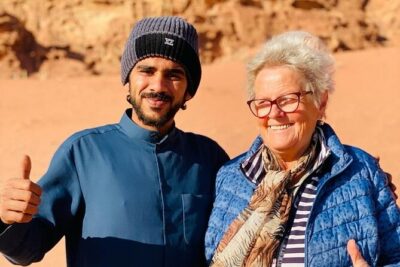
Wadi Rum Full Day Jeep Tour + Overnight & Dinner in Bedouin Camp
Read our review →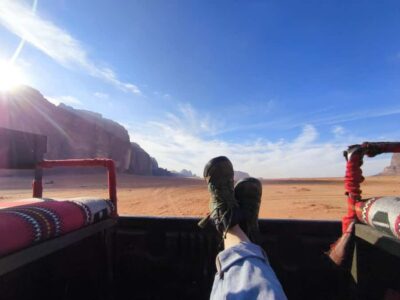
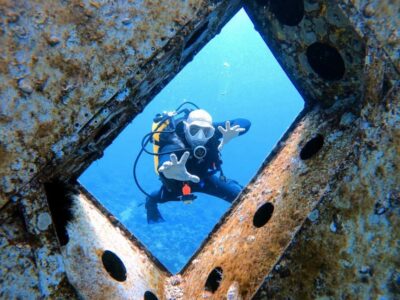
Private Red Sea Diving for Beginner or Experienced
Read our review →
Bedouin Camp Stay,Full-Day Desert Tour with 3Meals
Read our review →
Browse the lists this tour appears in