Reviewed · PETRA TOURS
Half-Day Private Indiana Jones Petra Back Road Trial Tour
Petra’s best views are not all found along the main path. This private horse-riding route through Little Petra and the back trails takes you above the usual crowds before leading toward the Monastery and the central ruins. You’ll pass caves, old villages, mountain paths, and broad views toward Jordan and the West Bank.
I like the peaceful start at Little Petra, where the caves and ancient settlements make the Nabataean past feel close at hand. I also like the private format and Mohammed’s careful handling of the horses, which lets you move at your group’s pace. The main drawback is the physical effort: the Monastery requires about 800 rock-cut steps, and the Petra entrance fee of 50 JD is not included.
Key points to know before booking
- Little Petra is the quiet opening: You begin away from Petra’s busiest monuments, among caves, old villages, and sandstone hills.
- Qararah Park brings wide views: The high ground gives you a different look at Petra before you reach the main city.
- The Monastery takes work: Expect roughly 45 minutes and about 800 steps to reach Al Dayr.
- The route combines riding and walking: Horses are part of the adventure, but you should be ready for uneven ground and substantial walking.
- The central ruins come later: The return route includes the Colonnaded Street, Girl Palace, Royal Tombs, Byzantine Church, Theater, and Treasury.
- The price needs careful calculation: The tour costs $165 per person, with Petra admission charged separately at 50 JD.
Why Petra’s back route feels different
Most first visits to Petra follow the famous Siq toward the Treasury. That route is essential, but it is also the most familiar way into the ancient city. This outing takes a less direct path, beginning at the Petra Visitor Center and heading through the hills toward Little Petra.
That change matters. Instead of seeing Petra as a sequence of major monuments, you begin with the setting that made the city possible: sandstone cliffs, narrow routes, caves, high ground, and sheltered valleys. The pace is also more personal because this is a private activity. Only your group takes part.
The tour lasts about five to six hours, with the stated start time at 8:00 a.m. That early start is useful in Petra. You have more time before the strongest heat of the day, and the morning gives the route a calmer feel. The exact amount of riding, walking, and time at each stop can vary, so you should ask Mohammed about the day’s plan before setting off.
Mohammed is praised for communicating clearly and taking care with both riders and horses. That is important here. Petra’s trails are not smooth park paths, and a good horseman makes a real difference when the route crosses rock and uneven ground.
More ways to see Petra:
- Amman: Petra, Wadi Rum, and Dead Sea 2-Day Tour
★ 4.9 · 1,173 reviews - 2-Day Tour: Petra, Wadi Rum, and Dead Sea from Amman
★ 5.0 · 1,141 reviews - From Amman: Petra & Wadi Rum Private or group Day Tour
★ 4.9 · 750 reviews
Starting at the Petra Visitor Center
You meet at the Petra Visitor Center in Wadi Musa at 8:00 a.m. From there, the route goes through the mountains toward Qararah Park, a high point with striking views of Petra’s sandstone surroundings.
Qararah Park is a worthwhile early stop because it gives you a sense of the scale of the area. From above, the cliffs and valleys fit together in a way that is hard to grasp from the valley floor. You can also pause here to get your bearings before the route becomes more enclosed.
The path continues along Dabdabah Road toward the Petra Bubble Luxel Resort, then onward to Little Petra. The setting is a major part of the appeal. This is not simply a shortcut to the Monastery. It is a route through the dry hills, with changing views and stretches where the rock formations take center stage.
You should wear sturdy shoes even though horses are included. The tour is built around horse riding, but the listed route also involves walking through ruins and climbing to the Monastery. Sandals or thin city shoes will make the rocky sections less pleasant.
Little Petra’s caves and old villages
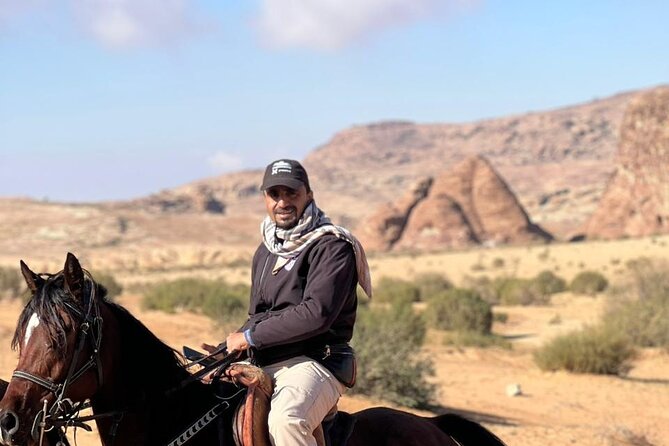
Little Petra, also known as Siq al-Barid, is smaller than the main Petra site but has its own character. The route takes you past caves and traces of old villages, giving you a useful look at daily life around the Nabataean center.
The narrow setting makes Little Petra feel quiet and sheltered. You can spend time looking at the carved spaces rather than simply taking a quick photograph and moving on. The stop lasts about an hour and a half, so there is room to notice details in the rock and ask questions.
I especially like this part for people who want more than Petra’s headline monuments. The Treasury and Monastery are spectacular, but Little Petra helps explain how people used the wider area. The caves and village remains show a place shaped by practical needs, not only grand façades.
There is also a contemplative quality here. The combination of shade, sandstone, and quiet paths gives you a chance to slow down. The tour description presents Little Petra as a place for reflection and imagination, and that is a fair way to think about this section. It is less about checking off monuments and more about noticing the setting.
Admission is not included in the tour price. The stated Petra ticket cost is 50 JD, so include that when working out your total budget. The material provided does not give a separate Little Petra ticket price, so confirm the admission arrangements when booking.
The climb to Al Dayr, Petra’s great Monastery
After Little Petra, the route heads to Al Dayr, usually called the Monastery. This is the visual high point of the excursion, but reaching it takes effort.
The final approach includes roughly 800 steps cut into the rock. The climb takes about 45 minutes for many people, though your pace will depend on fitness, heat, and how often you stop. The horse cannot replace this section of walking, so do not book the tour expecting a ride all the way to the monument.
The reward is one of Petra’s largest façades. The Monastery is about 58 meters wide and was carved into the sandstone more than 2,000 years ago. Its name comes from its later use as a Byzantine church, one of two major Petra structures converted to Christian use during the Byzantine period.
Take your time at the top. The Monastery is not just a place to photograph and leave. The scale of the façade becomes clearer when you stand back, and the high position opens views across the mountains toward Jordan and the West Bank. The setting gives Al Dayr a greater sense of isolation than the Treasury, which sits lower and closer to the main route.
This stop lasts about two hours. That includes the climb, time at the Monastery, and the return movement through the site. Bring water, use the bottled water provided, and pace yourself. The tour requires moderate physical fitness, and this is the section that makes that requirement real.
If you have knee, balance, or stamina concerns, ask about the horse arrangements before you commit. The information confirms that horses are used, but it does not state that riding is possible on every section or that assistance is available for the 800-step climb.
A few more Petra trips to weigh up
- Private Half-Day Tour of Petra with Lunch
★ 4.5 · 46 reviews - Wadi Rum Half-Day Desert Tour | Wadi Rum Desert
★ 5.0 · 86 reviews - Take advantage of a half-day boat dive experience in Red sea of Aqaba.
★ 5.0 · 71 reviews - Amman: Private Half-Day Tour to Madaba & Mount Nebo
★ 4.6 · 46 reviews
Returning through Petra’s central monuments
The route then continues through the old city toward several of Petra’s best-known ruins. This return section lasts about two hours and gives you a closer look at the main archaeological area.
The Girl Palace is described as a religious temple at the end of the Colonnaded Street. Its survival through earthquakes makes it an interesting stop, even if the name can be confusing. It is not a palace in the modern sense, so I would treat it as part of Petra’s sacred and civic zone rather than expect an intact royal residence.
The Colonnaded Street follows the familiar Roman east-west pattern known as a decumanus. It once formed a major route through the city, with buildings and smaller sights along either side. Walking here after the quieter back trails gives you a useful contrast: first the remote caves and hills, then the formal public center.
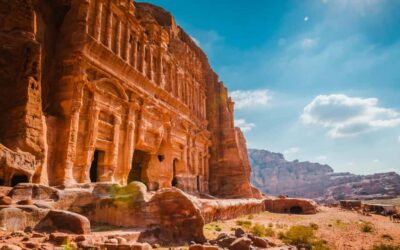
The Royal Tombs are among the most impressive carved façades in Petra. Cut from rose-red sandstone by the Nabataeans about 2,300 years ago, they show how Petra’s builders used the natural cliffs as both architecture and monument. Look at the differences in size and shape between the tomb façades. The variety is part of what makes this section more than a simple walk from one attraction to another.
You will also see the remains of the fifth-century Byzantine Church. Its presence adds another period to Petra’s story. The city was not frozen in the Nabataean age. It continued to be used and adapted long after the original stone façades were carved.
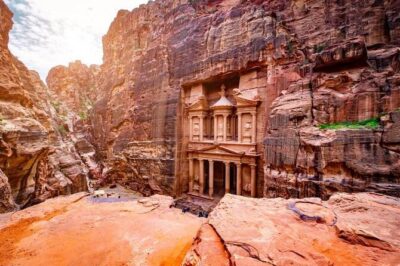
The route includes the Theater and the Treasury as well. The Theater was cut into the rock and used as a public gathering place. The Treasury, known locally as Al Khazneh, is Petra’s most famous façade and often the image people carry home from Jordan.
Seeing the Treasury near the end can work well. By then, you have already seen the surrounding mountains, Little Petra, the Monastery, tombs, and central street. The famous façade becomes part of a much larger picture instead of the whole point of the visit.
What the horse riding adds
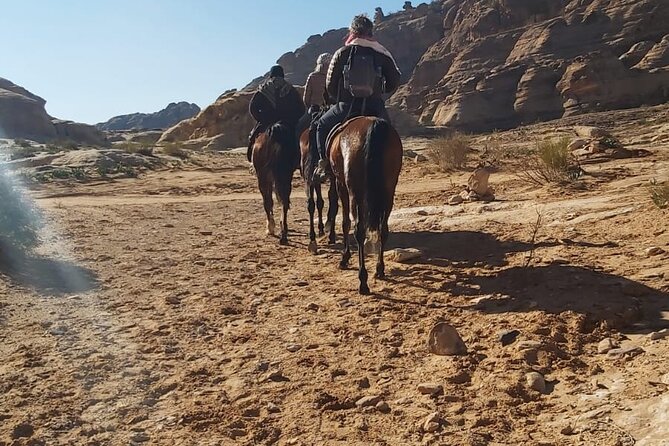
The horses are not just transport. They change the way you experience the distance between Petra’s sites. Moving through mountain paths on horseback gives you a higher view than walking and can make the back route feel more adventurous.
One useful detail from the experience is the care given to the animals. Mohammed is described as a skilled horseman who checks that riders feel safe and comfortable, while the horses are well cared for and calm. That matters for beginners, older riders, and anyone uneasy about handling a horse in rocky country.
The riding also has limits. This is not a long open-country gallop, and you should not picture a continuous horseback ride from the Visitor Center to the Treasury. The Monastery climb is on foot, and the central ruins require walking and exploration. Think of the horse as one part of a mixed mountain and archaeological outing.
The private format is a strong advantage for this type of route. You can stop for views, take photographs, or ask questions without holding up a large group. You also avoid being locked into the pace of strangers. The tradeoff is that $165 per person is a serious expense, especially once you add the 50 JD Petra ticket.
Price, timing, and practical value
At $165 per person, this is not the budget way to see Petra. The price makes more sense if you value a private guide, horse riding, access to a back route, and a full half-day that links Little Petra, the Monastery, and the central monuments.
If you only want to see the Treasury and walk the main path, you can spend less by visiting independently. If you want the back-country approach and do not want to plan the route yourself, this tour offers more than simple transportation.
Bottled water is included. Petra admission is not, and the stated ticket cost is 50 JD. The activity ends back at the Petra Visitor Center, which simplifies the start and finish of your day.
The tour requires moderate physical fitness and good weather. If bad weather cancels the activity, you can choose another date or receive a full refund. You can cancel for a full refund up to 24 hours before the 8:00 a.m. start time. Changes or cancellations made inside that 24-hour window are not refunded.
Service animals are allowed, and the meeting point is near public transportation. The activity is private, but the information does not state the maximum group size, so ask if you have a larger party.
Who should book the Indiana Jones back trail?
I would recommend this outing to an adventurous first-time visitor who wants Petra to feel like more than a straight walk to the Treasury. It suits you best if you enjoy horses, mountain views, archaeological remains, and a route with some physical challenge.
It can also work well for a repeat visitor. The back route through Little Petra and the high views from Qararah Park offer a different side of the Petra area, while the return through the Royal Tombs, Theater, and Treasury covers familiar highlights from a new direction.
Older riders may enjoy the private pace, and one person aged 72 found the high valley views especially rewarding. Still, age alone is not the issue. You need to be comfortable with uneven terrain and the 800-step climb, or at least confirm in advance how much of the route you can manage.
I would skip it if you want a relaxed, flat sightseeing day, dislike horses, or have limited stamina for steep stone steps. The Monastery section is beautiful, but it is not effortless.
Should you book this Petra ride?
Book it if you want a private, active day that combines Little Petra’s quiet caves, mountain riding, the Monastery, and Petra’s major central ruins. The strongest reasons are the high viewpoints, the unusual approach, and Mohammed’s careful attention to rider comfort and horse safety.
Skip it if your main goal is simply the Treasury, or if the extra 50 JD entrance fee makes the total cost too high. For the right visitor, this is a memorable way to connect Petra’s remote paths with its grand monuments. Just arrive ready to walk, climb, and share the day with a horse.
FAQ
Where does the tour start?
The tour starts at the Petra Visitor Center at 8:00 a.m. The address provided is Petra Visitor Center, 28, Wadi Musa, 00962, Jordan.
Where does the tour end?
The activity ends back at the Petra Visitor Center, the same meeting point where it begins.
How long does the experience last?
The full experience lasts approximately five to six hours. The listed sections include about one and a half hours around Little Petra, two hours at the Monastery, and two hours exploring the central Petra sites.
Is the Petra entrance ticket included?
No. The Petra ticket is not included. The stated entrance cost is 50 JD.
How difficult is the tour?
You should have a moderate level of physical fitness. Reaching the Monastery involves about 800 rock-cut steps and takes around 45 minutes of walking for many people.
Is this a private activity?
Yes. Only your group participates in the activity.
What happens if the weather is poor?
The experience requires good weather. If it is canceled because of poor weather, you will be offered another date or a full refund. Free cancellation is available when you cancel at least 24 hours before the start time.
Just added around Petra
- From Amman | Dead sea and Petra in one day | Admission Fees Included★ 5.0 · 3 reviews
- 4-Days tour : Jerash, Amman, Petra ,Wadi-rum& Dead-sea.★ 5.0 · 3 reviews
- 2-Night Private Wonder Tour of Petra and Wadi Rum Overnight from Amman★ 5.0 · 3 reviews
- Transfer from Aqaba Airport to Petra★ 5.0 · 3 reviews
- Petra & Wadi Rum Tour from Eilat Border for 03 Days★ 5.0 · 3 reviews
- Petra Day Tour from Aqaba Port (Shore Excursion Petra) – JHT★ 5.0 · 3 reviews
- Full-Days Tours Petra from Amman★ 5.0 · 3 reviews
- Transfer Amman To/From Petra★ 5.0 · 3 reviews
Petra Tours, compared.
2-Day Tour: Petra, Wadi Rum, and Dead Sea from Amman
Read our review →
2-Day Petra, Wadi Rum and Dead Sea Tour from Amman
Read our review →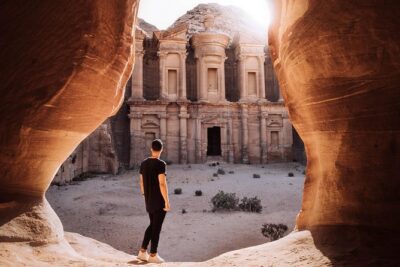
3-Day Private Tour from Amman: Petra, Wadi Rum, Dana, Aqaba, and Dead Sea
Read our review →