Reviewed · AMMAN TOURS
5-Desert Castles of Jordan Full-Day Private Tour from Amman
Jordan’s eastern desert is not empty in the way you might expect. Scattered across the dry plains are early Islamic palaces, forts, bathhouses, mosques, and ruined towns. Qusayr Amra, with its unusual wall paintings and UNESCO status, is the star, while Azraq, Kharana, Hallabat, and Umm al Jimal fill out the story.
I like the private car and flexible route, especially when Amman traffic makes driving on your own a chore. I also like having Wi-Fi, bottled water, and room to spread out during long stretches between sites. The main drawback is that this is described as transport with an English-speaking driver, not always a full guided tour. Ask in advance how much site explanation your driver will provide.
Key points to know before booking
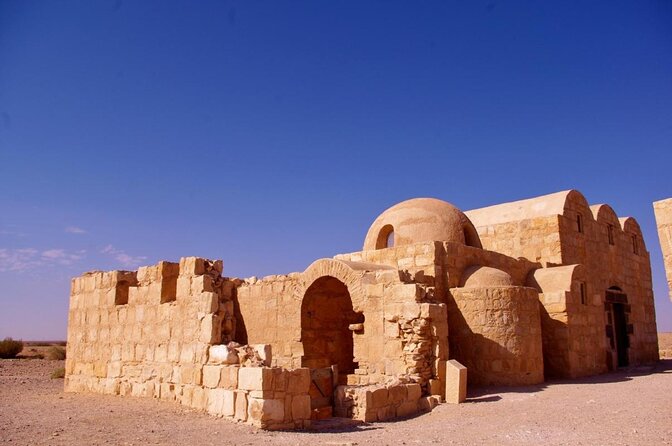
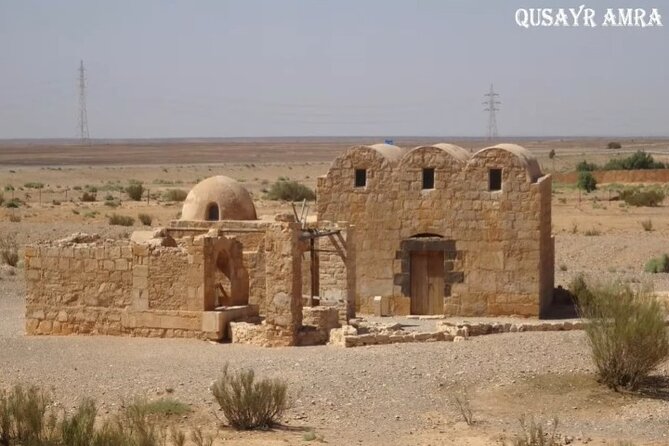
- Qusayr Amra is the essential stop: Its 8th-century bathhouse contains rare non-religious paintings from the early Islamic period.
- You can choose three or five sites: The shorter circuit covers Amra, Kharana, and Azraq. Hallabat and Umm al Jimal make the day longer and more archaeological.
- Private transport matters here: You avoid arranging several remote taxi rides and have the vehicle to yourself.
- The tour runs about seven to eight hours: The five-site version gives you more ruins but less unhurried time at each place.
- Admission costs extra: Bring money for entry fees, and budget separately for a driver gratuity.
- Driver quality matters: Jehad, Jaber, Ebrahim, and Esam have each been praised for warmth, safe driving, history notes, and Jordanian food suggestions.
Why Jordan’s desert castles are worth a day
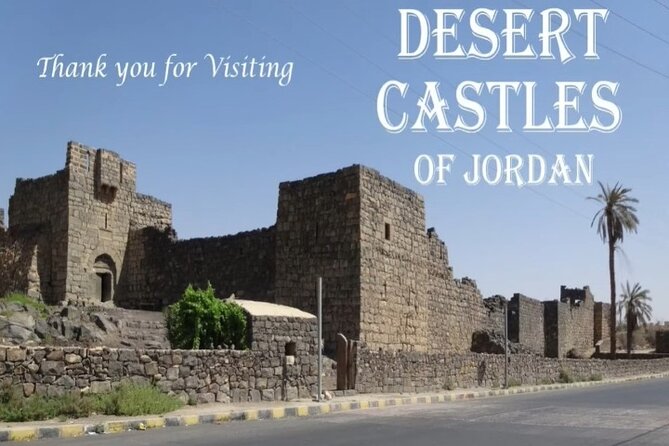
The phrase desert castle can give you the wrong picture. These are not five identical fortresses lined up for quick photographs. They served different purposes under the Umayyads and later rulers: hunting lodges, country residences, military posts, caravan stations, baths, and rebuilt Roman or Byzantine sites.
That variety is what makes the trip worthwhile. At one stop you examine paintings of musicians, hunters, and bathers. At another you walk through a dark basalt fortress tied to Lawrence of Arabia. Elsewhere, you see a palace built over a Roman fort or a large ruined settlement made almost entirely from black stone.
I would not make this your only Jordan excursion. Petra, Wadi Rum, Jerash, and the Dead Sea usually deserve priority on a first visit. But after those famous places, the desert castles give you a quieter day and a better sense of Jordan beyond the main tourist route.
The tour begins in Amman and heads east. The drive is part of the experience, though it is not sightseeing at every moment. You will spend meaningful time in the vehicle, which makes the air-conditioning, water, Wi-Fi, and private seating more than minor extras.
A few more Amman trips to weigh up
- From Amman: Petra and Wadi rum Full day Tour
★ 5.0 · 538 reviews - Petra Full-Day Private Tour from Amman
★ 4.9 · 392 reviews - Amman Petra Full-Day Trip
★ 5.0 · 270 reviews
Qusayr Amra: the small palace with remarkable paintings
Qusayr Amra, also called Qasr Amra, is the most important stop on the route. The Umayyads built it in the 8th century as a fortress and residence, but its real purpose appears to have included leisure. The site contained a bathhouse and was decorated with scenes from everyday and courtly life rather than only religious imagery.
Allow about an hour here. Admission is not included, so set aside money for the ticket. The building is not huge, but it rewards close attention. Look at the wall paintings instead of rushing outside after a quick glance at the stone exterior.
The paintings show how early Islamic art could include hunting scenes, animals, musicians, rulers, and bathing imagery. That makes the site especially interesting for anyone who assumes early Islamic architecture is mostly austere or purely religious. The bathhouse also gives the small palace a surprisingly personal feel.
Qusayr Amra is a good place to have an informed driver. A short explanation can help you understand why a remote building included both military features and a pleasure setting. Drivers such as Jaber and Esam have been praised for explaining the sites and sharing practical suggestions about Jordan.
Still, do not assume that every departure includes a trained archaeological guide. The experience may be closer to private transport with commentary than a formal guided visit. If Qusayr Amra is the main reason you are booking, ask clearly if your driver will walk through the site with you or simply wait in the car.
Qasr Kharana: a fortress-like shape in open desert
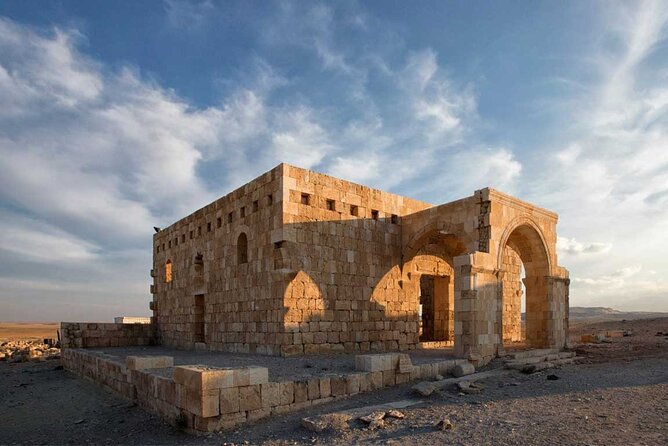
Qasr Kharana, also written as Harranah, Kharanah, Kharaneh, or Hraneh, is one of the best-known desert castles east of Amman. It sits roughly 60 kilometers from the capital and is relatively close to the Saudi Arabian border.
You get about an hour here. The strong square form, corner towers, and isolated setting make it an easy place to understand visually. Even before you enter, the building has the clean, severe look most people expect from a desert fortress.
Its exact role has been debated, and that uncertainty is part of the appeal. The site may have served as a meeting place, residence, or fortified station rather than a simple defensive castle. Inside, you can look at the rooms and corridors and consider how a building so far from a modern town functioned in its day.
Kharana is also a good photography stop because the structure contrasts sharply with the open ground around it. You will not need a long visit to appreciate the basic design, but an hour allows time to move through the interior without treating it as a five-minute photo break.
The five-stop route can make this visit feel brief if you linger at Amra or lose time on the road. If architecture matters more to you than collecting sites, the three-castle option may be the better fit.
Azraq Castle: black basalt and a vital oasis
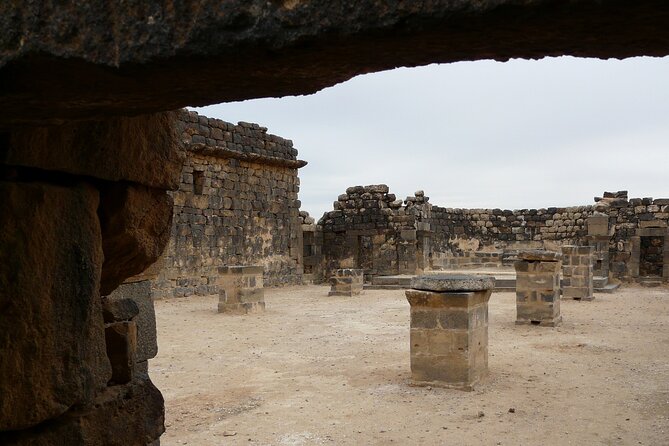
Qasr al-Azraq lies near the town of Azraq, about 100 kilometers east of Amman. Its importance came from the nearby oasis, once the only dependable water source across a huge stretch of desert. That detail explains why a large fortress was built here.
You have roughly an hour to explore. Unlike the pale stone buildings at Amra and Kharana, Azraq is made largely from dark basalt, giving it a heavier and more severe character. The stone also ties the fortress to the volcanic geology of northeastern Jordan.
Azraq has a later historical connection that many visitors find memorable. T. E. Lawrence and Sharif Hussein bin Ali used the fortress during the Arab Revolt, and Lawrence spent time here. The supplied tour information does not promise a dedicated Lawrence interpretation, so ask your driver for context if that story interests you.
The nearby oasis is just as important as the walls. Water explains the fortress’s position, and it helps you see the desert as a network of routes and resources rather than a blank stretch between attractions.
Azraq is one of the reasons I prefer having a private vehicle. The sites are spread out, and public transport would make this circuit awkward. You can rest between visits, use the onboard Wi-Fi, and keep small or medium-sized bags with you.
Same country, a completely different kind of day:
- Amman: Petra, Wadi Rum, and Dead Sea 2-Day Tour
★ 4.9 · 1,173 reviews - 2-Day Tour: Petra, Wadi Rum, and Dead Sea from Amman
★ 5.0 · 1,141 reviews - From Amman: Petra & Wadi Rum Private or group Day Tour
★ 4.9 · 750 reviews - 2-Day Petra, Wadi Rum and Dead Sea Tour from Amman
★ 5.0 · 467 reviews
Qasr al-Hallabat: Roman foundations and a mosque
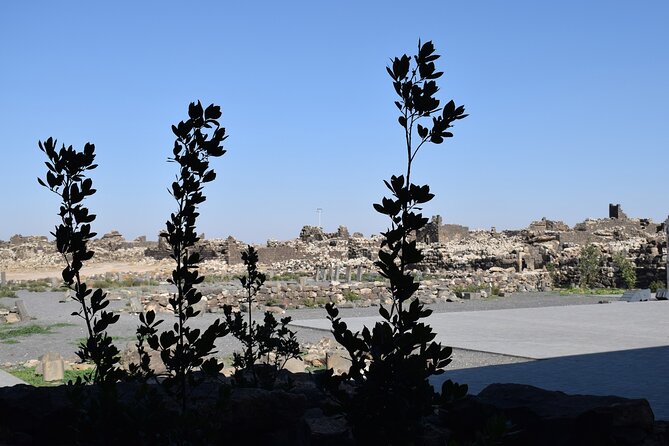
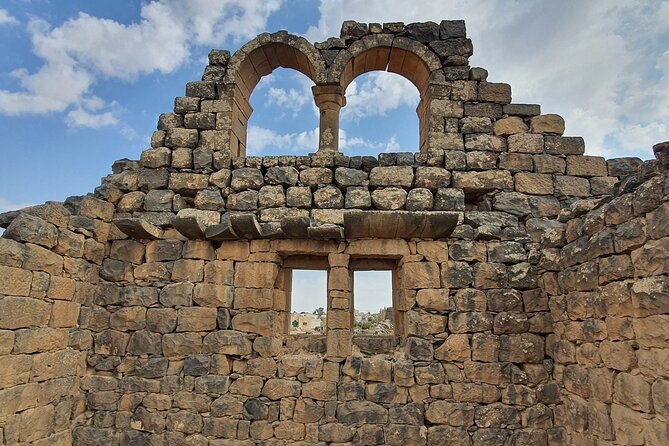
Qasr al-Hallabat is included when you select the longer version of the outing. Plan on about 45 minutes. The palace has a square layout with four towers and stands near a mosque. It was built on the site of an earlier Roman fort.
That earlier layer gives Hallabat a different feel from Kharana or Amra. You are not looking at one isolated building from one period. Greek inscriptions on 160 basalt blocks point to the Roman and Byzantine material reused or preserved at the site.
Forty-five minutes is enough for a general look, but it is not a long archaeological visit. If you enjoy inscriptions and construction details, you may want to ask for extra time. On the five-stop schedule, however, the driver must keep moving to complete the route in seven or eight hours.
Hallabat is best for people who like connections between periods. Roman military planning, later Islamic building, and the use of local basalt come together in one place. It is less instantly dramatic than Qusayr Amra, but it adds substance to the day.
Umm al Jimal: black-stone ruins on a larger scale
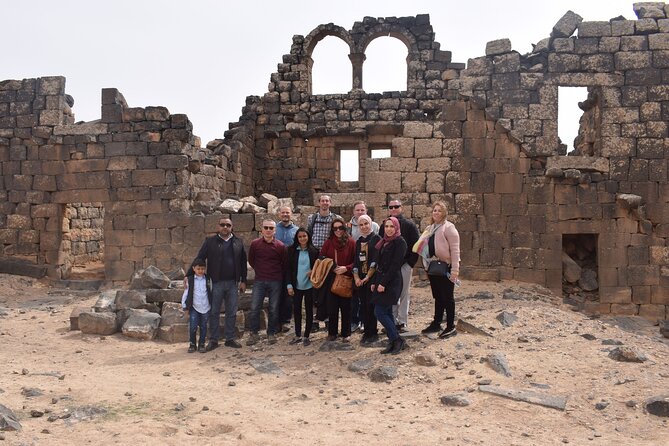
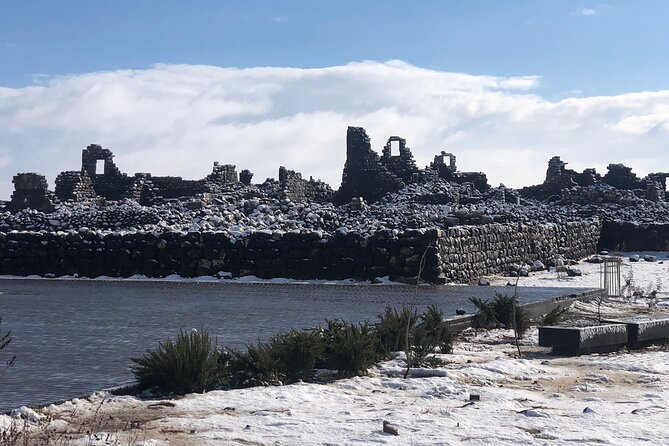
Umm al Jimal is also part of the extended route and lies about 17 kilometers east of Mafraq. Allow around 45 minutes. The site is associated with a village and ruined settlement rather than one single palace, so it changes the rhythm of the day.
Here, the black stone gives the remains a stark appearance. Instead of focusing on one complete castle, you look across a wider group of ruins and try to understand the scale of the former settlement.
This stop may appeal most to people who enjoy archaeology, old towns, and imperfect ruins. If you need every stop to have a clear entrance, tower, and photo point, Umm al Jimal may feel less immediate. If you like seeing how people lived around fortified sites, it adds useful perspective.
The short visit is the main limitation. Forty-five minutes can introduce the site, but it will not support a slow study of every wall and inscription. I would choose the five-stop version only if you are happy with an overview of each place rather than a deep visit to one or two.
Three castles or five, which route makes sense?
The basic choice is between the three-fortress circuit and the longer five-site outing. The three-stop route includes Qusayr Amra, Kharana, and Azraq. It gives you the core architectural experience and leaves more breathing room at each location.
The five-stop route adds Hallabat and Umm al Jimal. It is the stronger choice for repeat visitors to Jordan, archaeology fans, and anyone who wants to see how Roman, Byzantine, and early Islamic remains overlap in the northeast.
At $139.99 per person, value depends heavily on your group size and chosen route. You are paying for a private vehicle, an English-speaking driver, pickup, fuel and driving convenience, air-conditioning, Wi-Fi, and a full day reaching sites that are difficult to combine independently. For one person, the per-person price feels high. For a small private group, it becomes easier to justify because you are not buying several separate rides.
Entry fees are extra. Pickup or drop-off outside the standard area may also carry a supplement. Driver gratuities are strongly recommended, so include that in your working budget rather than treating it as an afterthought.
Group discounts may improve the price for larger parties. Since the number of people in your group affects value, compare the total cost with a private car hire before booking.
What the private vehicle changes
The tour uses a modern, air-conditioned vehicle and provides free Wi-Fi and mineral water. Each person may bring a small or medium-sized bag. Those details matter because the route covers long stretches in exposed country, and there are several stops rather than one compact attraction.
You avoid navigating Amman’s traffic at the start and end of the day. You also avoid the hassle of finding separate transport between remote castles, where a missed connection could ruin the schedule.
The private format means only your group participates. You can talk freely, keep your belongings close, and spread out during the drives. It may also be possible to adjust the pace within reason, though the five-stop schedule leaves less flexibility than the three-stop version.
The Wi-Fi is useful for maps, messages, and checking plans without relying on roaming data. One reported poor experience raised concerns about missing Wi-Fi, water, and English conversation, so I would confirm those inclusions at pickup and contact the company through WhatsApp if anything is unclear.
Driver style and the guide question
The strongest part of this experience can be the person behind the wheel. Jehad has been praised for being friendly. Jaber has been associated with clear history explanations and a good local restaurant suggestion. Ebrahim has been described as pleasant and welcoming, while Esam has been praised for humor, site information, safe driving, and practical Jordan advice.
Those names do not mean you can request a particular driver or that every departure will have the same style. They do show what to look for: safe driving, useful context, and help with the day beyond simply opening the car door.
The wording promises an English-speaking driver, not a licensed specialist guide. That distinction is important. If you want a formal history lecture at every castle, arrange that expectation before you pay. If you mainly need comfortable transport and occasional explanations, this setup may suit you well.
A stop for lunch is not listed as an included feature, although one account described returning toward Amman for mansaf. Treat lunch suggestions as a possible driver recommendation, not a guaranteed part of the tour or the price.
Who will enjoy this day most?
I would recommend the tour to you if you have already seen Jordan’s headline sights and want a quieter historical outing. It also suits anyone who prefers a private car to a large group bus, especially couples, families, and small groups sharing the cost.
History fans should choose the five-site route if they are comfortable with short visits. Photographers may prefer the three-site version because it leaves more time to frame Kharana, study Amra’s details, and explore Azraq without watching the clock.
This is less suitable if you dislike long drives, want a hands-on guided archaeology tour, or prefer a relaxed day at only one or two sites. The route covers a lot of ground. Its strength is range, not slow exploration.
Most people can participate, and service animals are allowed. Provide a WhatsApp number so the company can reach you about pickup. If you need pickup or drop-off outside the regular area, check the extra charge before confirming.
Booking advice and final verdict
I would book this tour when convenience is worth paying for and the desert castles are a secondary, but meaningful, part of a Jordan trip. Choose three sites for a cleaner day focused on Amra, Kharana, and Azraq. Choose five if you want a broad survey and do not mind 45-minute visits at Hallabat and Umm al Jimal.
Before booking, confirm three things: which route your price covers, how much English explanation the driver provides, and the expected entry fees. Also confirm Wi-Fi and water at pickup, then tip the driver if the service is friendly, safe, and useful.
The tour has a strong idea behind it and a practical way to reach remote sites. Its value rises with a shared private group and a good driver. If you want Jordan’s famous ruins without the crowds and are willing to accept transport-led touring, this is a smart addition after the main sights.
FAQ
How long does the desert castles tour last?
The experience takes approximately seven to eight hours.
Which castles are included in the three-site route?
The three-castle circuit includes Qusayr Amra, Qasr Kharana, and Qasr al-Azraq.
Which sites are added to the longer option?
The extended option adds Qasr al-Hallabat and Umm al Jimal.
Is Qusayr Amra a UNESCO World Heritage Site?
Yes. Qusayr Amra is listed as a UNESCO World Heritage Site.
Are entrance fees included?
No. Admission tickets for the sites are not included in the tour price.
Is transportation private?
Yes. The tour uses private transportation, and only your group participates.
What is included in the vehicle?
The vehicle is modern and air-conditioned. Free Wi-Fi and mineral water are provided, and each person may bring a small or medium-sized bag.
Can I cancel for a full refund?
Yes. You can cancel at least 24 hours before the local start time for a full refund. Cancellations or changes made within 24 hours are not accepted for a refund.
Just added around Amman
- From Amman/Airport: 3-Night Private Jordan Special Tour★ 5.0 · 3 reviews
- Private Tour: Jerash and Umm Qais Day Trip from Amman★ 4.0 · 3 reviews
- From Amman | Dead sea and Petra in one day | Admission Fees Included★ 5.0 · 3 reviews
- Private Guided Umm Quais and Jerash tour with lunch★ 5.0 · 3 reviews
- Dead Sea & Jerash Full-Day Private Tour from Amman or Airport★ 5.0 · 3 reviews
- Private Half-Day Ma’in Waterfalls and Hot Springs Tour from Amman★ 5.0 · 3 reviews
- 4-Days tour : Jerash, Amman, Petra ,Wadi-rum& Dead-sea.★ 5.0 · 3 reviews
- Dead Sea Full Day Tour including Lunch★ 5.0 · 3 reviews
Amman Tours, compared.
2-Day Tour: Petra, Wadi Rum, and Dead Sea from Amman
Read our review →
2-Day Petra, Wadi Rum and Dead Sea Tour from Amman
Read our review →
3-Day Private Tour from Amman: Petra, Wadi Rum, Dana, Aqaba, and Dead Sea
Read our review →