Reviewed · AMMAN TOURS
Départ Garanti Francophone (GIR) SAMEDI – SAMEDI
Petra is the star, but the 90-minute Bedouin 4×4 ride in Wadi Rum gives this eight-day Jordan trip its real sense of adventure. You also see Roman ruins, desert castles, Byzantine mosaics, Crusader fortresses, and the Dead Sea, all with a permanent French-speaking guide.
I like the smooth route from Amman south to Petra and Wadi Rum, followed by a restful Dead Sea finish. I also like that six lunches and six dinners are included, along with entrance fees and modern air-conditioned transport. The main thing to consider is the pace: several sightseeing days run for six hours, and the tour may include as many as 150 people.
Key points to know before booking
- Petra receives a full six-hour visit, giving you time to walk through the famous canyon and explore the ancient city.
- Wadi Rum includes a local Bedouin 4×4 excursion lasting about an hour and a half, plus dinner and a night in Bedouin tents.
- A French-speaking guide accompanies the sightseeing days, with Abdelrhman Bawaneh and Firas among the guides associated with this program.
- The itinerary covers both famous sights and lesser-known stops, including Qasr Al-Harranah, Quseir Amra, and Azraq Castle.
- Meals and admission fees reduce daily planning, though drinks, tips, insurance, flights, and a Petra carriage ride cost extra.
- The final day at the Dead Sea offers a slower change of pace, with time set aside for swimming after a busy week.
What the $875 price really covers
At $875 per person, this is a strong package for someone who wants Jordan arranged from start to finish. The price includes airport assistance, hotel transport, a modern air-conditioned vehicle, a French-speaking guide during sightseeing, listed entrance fees, seven breakfasts, six lunches, six dinners, and the Wadi Rum 4×4 ride.
That combination matters in Jordan. You are not only paying for entry to Petra or Jerash. You are also paying for the long transfers between Amman, the southern sites, the desert, and the Dead Sea. A guide also gives the ancient stones a clearer purpose, especially at places where the remains can be hard to read on your own.
The package does not include flights, drinks, customary tips, travel insurance, or the optional horse-drawn carriage at Petra. A single-room supplement applies if you need an extra room. The New Year’s Eve evening is also excluded.
The food plan is generous, but it does not cover every meal. Breakfast is included on all seven mornings. Six lunches and six dinners are included, while drinks are separate. I would still budget extra money for bottled drinks, snacks, tips, and any personal purchases.
A few more Amman trips to weigh up
- Amman: Petra, Wadi Rum, and Dead Sea 2-Day Tour
★ 4.9 · 1,173 reviews - 2-Day Tour: Petra, Wadi Rum, and Dead Sea from Amman
★ 5.0 · 1,141 reviews - From Amman: Petra & Wadi Rum Private or group Day Tour
★ 4.9 · 750 reviews
Day 1: A simple arrival in Amman
Your trip begins with airport pickup at Queen Alia International Airport. Assistance is provided before customs, followed by transfer to your hotel in Amman. Dinner and overnight accommodation are included.
This first day is deliberately light. After a flight, that is useful. You will not be pushed straight into a major archaeological site or a long drive. The stated meeting time is 8:00 am, so confirm how that applies to your arrival details before departure, especially if your flight lands later in the day.
Day 2: Amman, Roman ruins, and the eastern desert castles
The first full day begins in Amman, Jordan’s hilltop capital. The city is built largely from pale limestone, giving its many neighborhoods a warm cream color in the sun. From the Citadel, you get a broad view over the tightly packed hills and the city center below.
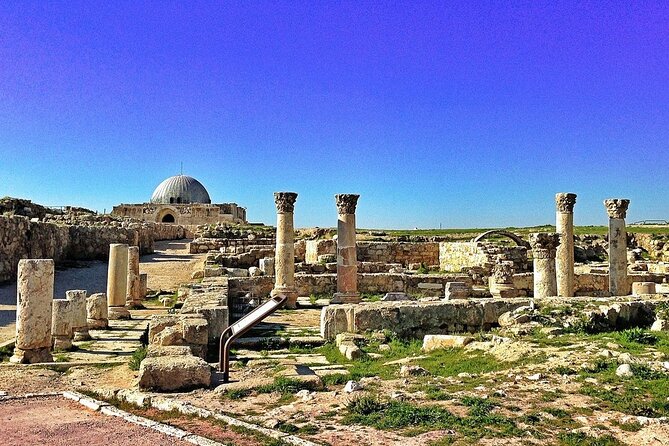
The Citadel, or Jabal al-Qalaa, brings several periods together in one place. You see Roman ruins, a former palace, and the National Archaeological Museum. The site is compact enough to visit in about an hour, but the open views are just as important as the remains.
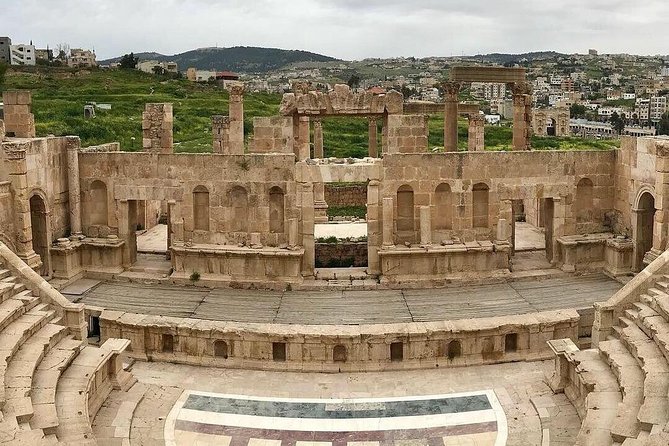
From there, the tour goes down to the Roman Theatre. This large structure was built during the reign of Antoninus Pius and once held about 6,000 people. The steep stone seating makes the scale easy to understand, while the nearby remains of the forum and Odeon help you picture ancient Philadelphia, the Roman name for Amman.
The afternoon heads east into Jordan’s desert. Qasr Al-Harranah is about 55 kilometers from Amman. Its sturdy form has led scholars to suggest a military purpose, though the large stables also support the idea that it served as a caravan stop. This is a good place to see how practical desert architecture could be.
Quseir Amra, about 26 kilometers southwest of Azraq, is smaller and more refined. Built in the early eighth century by Caliph Walid I, this desert retreat is known for its rounded forms and surviving decoration. The building’s connection with hunting, poetry, and courtly pleasure gives you a different view of early Islamic life than the military sites do.
The final stop is Azraq Castle, also called Qasr Al Azraq. A 1927 earthquake damaged the fortress, but its dark stone construction and central courtyard remain impressive. An inscription over the main entrance helped date its renovation to the thirteenth century, when the mosque in the courtyard was likely built.
This is a long day with five stops, each lasting about an hour. The reward is variety. The drawback is that the desert castles are spread out, so much of the day is spent on the road. You should be comfortable with several short visits rather than one extended site.
Day 3: Jerash and Ajloun Castle
Jerash is one of Jordan’s great archaeological sites and receives about three hours here. Ancient Gerasa was a major Roman provincial city, with paved streets, colonnades, temples, theatres, and broad public spaces. Much of it was covered by sand for centuries before restoration began, which helps explain why so many structures remain visible today.
The site is laid out on a large scale. You can follow the old streets and get a strong sense of Roman town planning rather than simply looking at isolated ruins. The warm pink and orange limestone changes color in the sun, making an early start especially appealing.
After lunch, the route continues to Ajloun. The mountain fortress, Qalaat al-Rabad, was built in the twelfth century during the time of Saladin. Its purpose was strategic: it helped defend the area, monitor the iron mines, and block Crusader movement toward Jerusalem.
Ajloun also gives you a change from Roman columns and desert stone. The castle sits high above the surrounding valleys, so the views are a major part of the visit. Allow about two hours here, including time to walk through the fortress and take in the setting.
You return to Amman for dinner and another hotel night. Like Day 2, this is a full sightseeing day. The walks at Jerash and Ajloun are manageable for anyone with moderate physical fitness, but the amount of standing, uneven ground, and stair use should not be underestimated.
Same country, a completely different kind of day:
- From Amman: Petra and Wadi rum Full day Tour
★ 5.0 · 538 reviews - 2-Day Petra, Wadi Rum and Dead Sea Tour from Amman
★ 5.0 · 467 reviews - 3-Day Private Tour from Amman: Petra, Wadi Rum, Dana, Aqaba, and Dead Sea
★ 5.0 · 425 reviews - Petra Full-Day Private Tour from Amman
★ 4.9 · 392 reviews
Day 4: Madaba mosaics, Mount Nebo, and Kerak
Day 4 follows the historic King’s Highway toward southern Jordan. The first major stop is Madaba, a city known for its mosaic work. The most important piece is inside St. George’s Church: a sixth-century mosaic map of the Byzantine Near East.
The map originally measured about 25 meters by 5 meters and used roughly two million small stone pieces. Although much of it has been lost, the surviving sections still show how artists represented the region’s towns, rivers, and religious sites. I like this stop because it rewards close attention. You are not simply looking at a floor; you are reading an old map made for a church community.
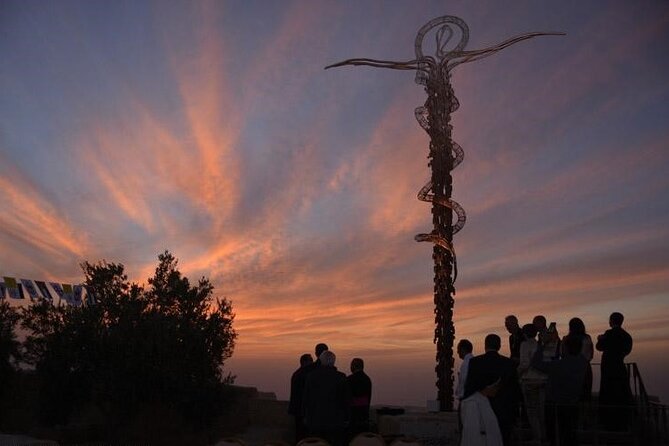
Mount Nebo is about 10 kilometers northwest of Madaba and reaches 840 meters. Christian tradition identifies it as the place where Moses saw the Promised Land before his death. It became a pilgrimage site early in the Christian era.
The mountain is important for both religious and visual reasons. You can pause at the summit and consider its connection with the biblical story, while the elevated position gives you broad views across the Jordan Valley. The stop lasts about two hours, so there is time for both.
The day ends at Kerak, a major Crusader fortress. The castle was built in 1142 and became the residence of Payen the Butler, a lord of the Kingdom of Jerusalem. Later, it was held by Reynald of Châtillon, whose actions helped fuel conflict with Saladin. The fortress finally fell in 1189 after the Crusader defeat at Hattin.
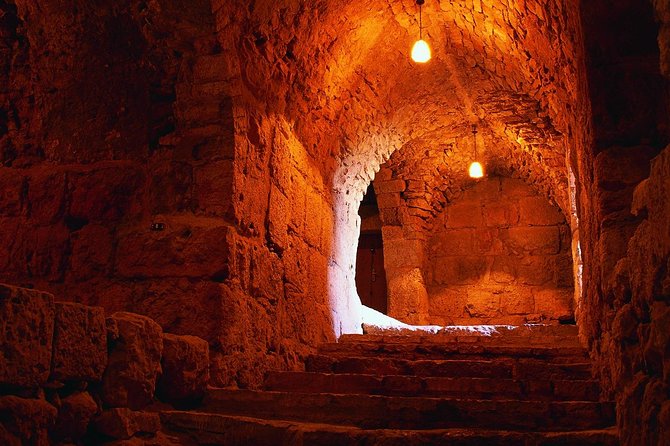
Kerak is a dramatic place to explore, with thick walls, dark passageways, and a commanding position above the Wadi Kerak. The supplied schedule lists the Kerak Archaeological Museum as the stop, but the description focuses on the fortress itself. Confirm locally how much time is devoted to the castle and museum on your departure.
This is another six-hour sightseeing day, followed by the continuing route south. It offers some of the best historical range in the program, but the schedule may feel tight if you prefer slow museum visits.
Day 5: Six hours at Petra
Petra gets the full day it deserves. The schedule allows about six hours, with breakfast at the hotel, a local lunch, afternoon exploration, and dinner at the hotel.
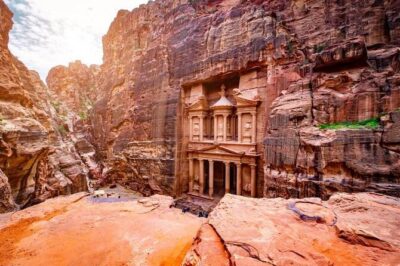
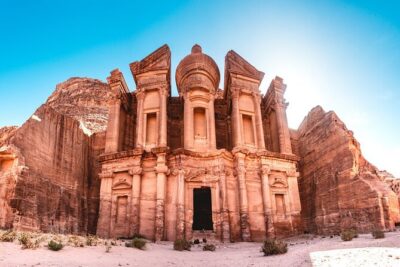
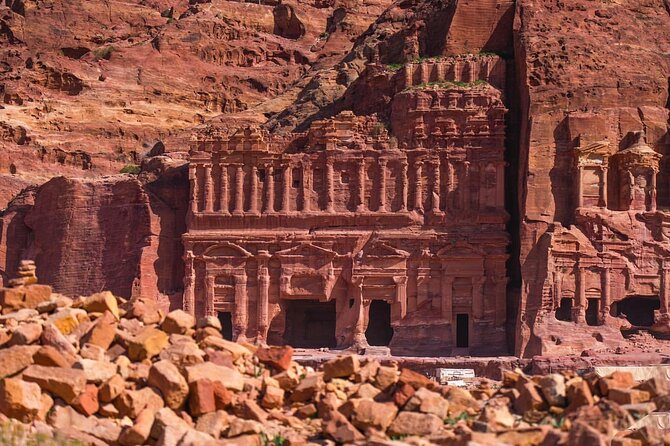
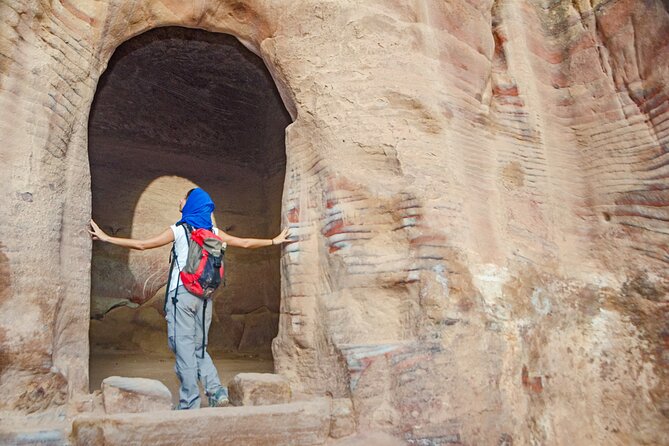
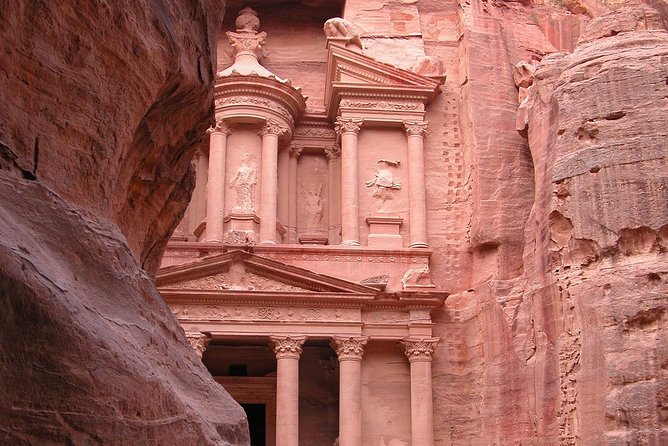
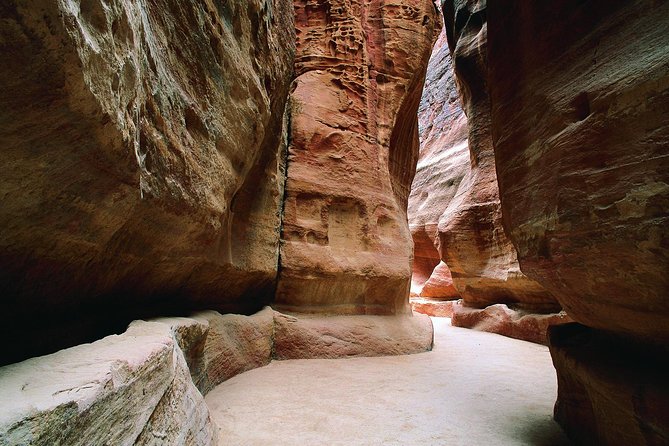
Petra was carved and built into rose-colored sandstone, which explains its familiar nickname, the Rose City. The famous approach through the narrow Siq is only the beginning. Once you reach the Treasury, the site continues into a broad valley filled with tombs, carved facades, stairways, and natural rock walls.
Six hours gives you a useful amount of time, though Petra is large enough that you still need to make choices. You may prefer to focus on the Siq, Treasury, Street of Facades, and the main valley. If your energy and fitness allow, you can spend more time on uphill routes and viewpoints.
The optional horse-drawn carriage costs extra. That may help if walking is difficult, but it is not part of the included price. The tour requires moderate physical fitness, and Petra’s stone paths, steps, heat, and distance make sensible shoes and sun protection essential.
Petra is the emotional center of the trip, but do not treat it as a quick photo stop. The guide’s French commentary can help explain how the Nabataeans used the site and why its location mattered. The program has previously been guided by Abdelrhman Bawaneh, described in the supplied material as passionate and closely involved with the journey. Firas is another guide connected with the program. Assignments can vary, so you should not book on the assumption that one particular guide will lead your departure.
Day 6: Little Petra and Wadi Rum by local 4×4
The route continues to Little Petra before reaching Wadi Rum. Little Petra is a smaller Nabataean site, and its place in the schedule gives you a useful lead-in to the much larger Petra experience you saw the day before.
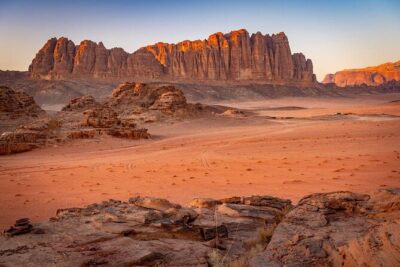
Wadi Rum is a very different kind of attraction. Here, the scenery comes from broad desert spaces, cliffs, peaks, and valleys rather than carved monuments. The area is closely linked with the Arab Revolt and with the film Lawrence of Arabia, which used the desert’s striking forms in several major scenes.
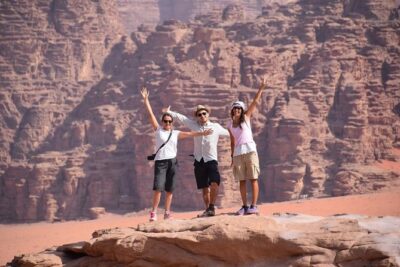
A local Bedouin 4×4 ride lasts about an hour and a half. This is one of the most memorable parts of the program because it gets you off the main road and into the open desert. The ride is included, as is lunch at a Bedouin camp.
Dinner and overnight accommodation are provided in Bedouin tents. The word tent covers a range of comfort levels, so ask for current details if bedding or private facilities matter to you. This is not a regular hotel night, and the appeal lies partly in the change of setting.
The day lasts about six hours, not counting the evening at camp. You should expect dust, sun, and a rougher ride than the tour bus. The 4×4 portion is short enough to remain approachable, but anyone sensitive to jolting should plan accordingly.
Day 7: The Dead Sea as a final rest
After breakfast at camp, you travel by the Araba route toward the Dead Sea. The sea sits 1,306 feet below sea level and is bordered by mountains to the east and the hills around Jerusalem to the west.
The program includes lunch and free time for swimming. This is a smart ending after Petra, Jerash, castles, and desert travel. You get a slower afternoon rather than another line of monuments.
The Dead Sea is known for its high salt content, mineral-rich mud, intense sun, and unusual floating sensation. The supplied information also describes long-held therapeutic associations with the water, mud, air, and climate. Treat those claims as part of the area’s traditional reputation rather than a substitute for medical advice.
Bring swimwear and be careful around the water. Avoid getting the salty water in your eyes, and do not shave immediately before swimming because even small cuts can sting. These are practical precautions, not extra services promised by the tour.
The Dead Sea stop is listed as free admission. That means the site entry itself is not charged in the tour details, but the exact swimming facility or hotel arrangement is not specified. Confirm where the free time takes place before booking if access to showers, changing rooms, or private beach facilities is important to you.
Day 8: Transfer back to Queen Alia Airport
After breakfast, the final service is transfer to the airport with assistance during departure formalities. No sightseeing is planned, and the airport transfer is included.
Keep this day flexible. The program does not give a flight-specific transfer time, so your departure details will determine how early you leave the hotel.
Guide, group size, and daily comfort
The permanent French-speaking guide is one of the program’s biggest advantages for French-speaking visitors. You receive explanations across several historical periods, from Roman Jerash to Byzantine Madaba, Islamic desert castles, Crusader Kerak, Nabataean Petra, and Bedouin Wadi Rum.
The maximum group size is listed as 150 people. That is a large possible group, even if a particular departure is smaller. A large group can make transport and logistics easier, but it may also mean slower boarding, more waiting, and less personal time with the guide.
Transport is provided in modern, air-conditioned vehicles according to the number of people. A bottle of water is offered on the bus during sightseeing. Still, carry extra water for Petra, Jerash, and the desert, especially during warm weather.
This tour suits you best if you want a structured first visit to Jordan and prefer French-language support. It is less suitable if you want independent hotel choices, long unscheduled hours at each site, or a small private group.
Should you book this Jordan tour?
Book it if you want the major sights handled in one clear eight-day route, with a French-speaking guide, most meals, entrance fees, airport transfers, and a Wadi Rum excursion already arranged. The program gives you a broad picture of Jordan rather than concentrating only on Petra.
Think twice if the possible 150-person group concerns you, or if you dislike long road days and fixed meal arrangements. Also check the hotel and Bedouin camp standards before paying, since the supplied details confirm accommodation but do not name the properties.
At $875, the package offers good practical value for a well-covered Jordan itinerary. I would choose it for a first visit, especially if French-language guiding matters and you want the Dead Sea and Wadi Rum included without arranging separate transport.
FAQ
How long is the Jordan tour?
The tour lasts eight days, generally running from Saturday to Saturday.
Where does the tour begin?
The tour begins with pickup at Queen Alia International Airport in Amman, Jordan.
What time is the stated start time?
The stated start time is 8:00 am.
Is airport pickup included?
Yes. Arrival pickup, assistance before customs, hotel transfer, and departure transfer with assistance during departure formalities are included.
Is a French-speaking guide provided?
Yes. A permanent French-speaking guide is provided during the sightseeing days.
Which major sites are included?
The program includes Amman, Jerash, Ajloun Castle, Madaba, Mount Nebo, Kerak, Petra, Little Petra, Wadi Rum, and the Dead Sea.
Is the Wadi Rum 4×4 ride included?
Yes. A local Bedouin 4×4 excursion lasting about one and a half hours is included.
How many meals are included?
Seven breakfasts, six lunches, and six dinners are included. Drinks are not included unless specifically stated in the program.
Are flights included?
No. International or domestic flights are not included.
Is the Petra horse-drawn carriage included?
No. The carriage ride at Petra is optional and costs extra.
What level of fitness is required?
A moderate level of physical fitness is recommended. The schedule includes walking through archaeological sites, uneven surfaces, stairs, and extended sightseeing periods.
How large can the group be?
The tour may have a maximum of 150 participants.
Is a single room included at no extra cost?
No. An additional single supplement applies if you require an extra room.
Can you cancel for a full refund?
Yes, if you cancel at least 24 hours before the experience start time. Cancellations made less than 24 hours before the start time are not refunded.
Just added around Amman
- Private Tour: Jerash and Umm Qais Day Trip from Amman★ 4.0 · 3 reviews
- From Amman/Airport: 3-Night Private Jordan Special Tour★ 5.0 · 3 reviews
- From Amman | Dead sea and Petra in one day | Admission Fees Included★ 5.0 · 3 reviews
- Dead Sea & Jerash Full-Day Private Tour from Amman or Airport★ 5.0 · 3 reviews
- Private Guided Umm Quais and Jerash tour with lunch★ 5.0 · 3 reviews
- 4-Days tour : Jerash, Amman, Petra ,Wadi-rum& Dead-sea.★ 5.0 · 3 reviews
- Private Half-Day Ma’in Waterfalls and Hot Springs Tour from Amman★ 5.0 · 3 reviews
- Private Tour: Full Day Trip of Jerash, Umm Qais, and Pella from Amman★ 4.5 · 3 reviews
Amman Tours, compared.
2-Day Tour: Petra, Wadi Rum, and Dead Sea from Amman
Read our review →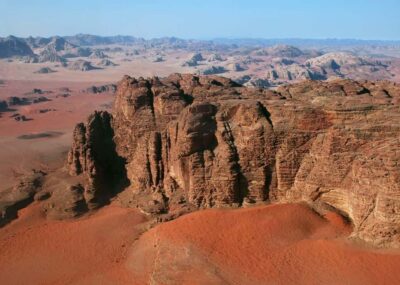
2-Day Petra, Wadi Rum and Dead Sea Tour from Amman
Read our review →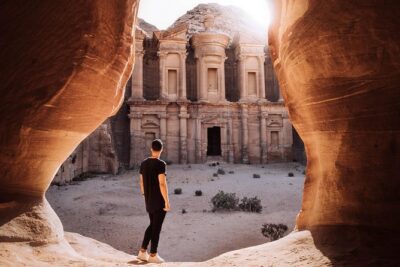
3-Day Private Tour from Amman: Petra, Wadi Rum, Dana, Aqaba, and Dead Sea
Read our review →