Reviewed · AMMAN TOURS
Day Tour To Desert Castles & Cave of the Seven Sleepers
The most surprising part of this outing is how much Jordanian history sits east of Amman, scattered across open desert and low hills. In one half-day, you see an Umayyad fort, a tiny palace covered in early Islamic frescoes, an enigmatic caravan stop, and a Roman-era cave tied to a long religious legend. Qusayr Amra’s paintings are the star, while Qasr al-Azraq gives the day a rugged military edge.
I like the private door-to-door transport, which saves you from arranging a rental car for a remote circuit. I also like the flexible pace. Drivers such as Mohammad Bardaghawi, Danny, and Ali Abu Hani have been praised for punctuality, useful local knowledge, and helpful adjustments, including changing the order of stops around Friday opening hours. The main catch is clear: this is primarily a private vehicle and driver service, not a full guided archaeological tour. If you want detailed explanations at every room, you may need to hire a local guide separately.
Key points before you book
- Four unusual historic stops: See Azraq, Qusayr Amra, Qasr al-Kharrana, and the Cave of the Seven Sleepers in one outing.
- Private transport from Amman: Your group rides alone in an air-conditioned vehicle with bottled water and onboard Wi-Fi.
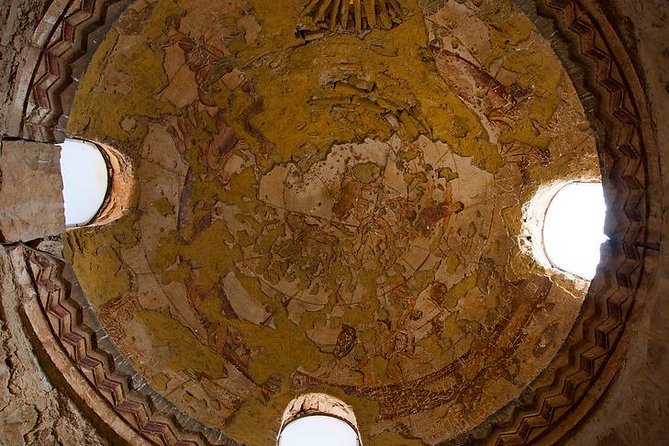
- Qusayr Amra is the artistic highlight: Its frescoes show animals, hunting scenes, portraits, and an early zodiac image.
- The driver may shape the day: The service includes an English-speaking driver, but not a dedicated local guide.
- Admission costs need checking: Entry is listed as extra unless you choose an option that includes fees.
- Allow up to eight hours: The advertised duration is about 5 to 8 hours, depending on timing and stops.
Why Jordan’s desert castles are worth your time
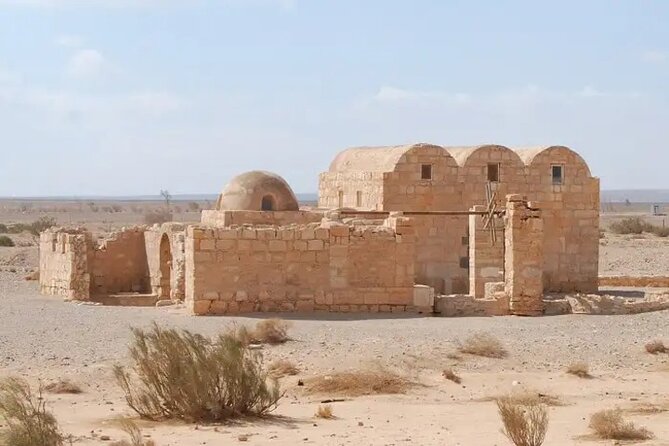
Amman gives you Roman ruins, busy markets, and hilltop views. East of the capital, the mood changes fast. The roads lead into a quieter part of the country where early Islamic rulers built forts, hunting lodges, baths, and resting places along important routes.
These buildings are often called Jordan’s desert castles, though the name can mislead you. Not every site was a defensive castle. Some served as country retreats, meeting places, caravan stops, or parts of larger estates. That variety is what makes the route worthwhile.
You also get a useful lesson in how Jordan’s past overlaps. The main castles date from the Umayyad period in the seventh and eighth centuries, while the Cave of the Seven Sleepers connects to Roman-era religious history. The sites are not polished into one tidy museum experience. You walk through ruins, courtyards, bare rooms, and weathered stone, then use the setting and surviving details to picture how each place once worked.
The private format matters here. Public transport would make this route awkward, and a self-drive trip requires comfort with remote roads and several separate stops. With a driver, you can look out at the red desert and low hills instead of concentrating on navigation.
A few more Amman trips to weigh up
- Amman: Petra, Wadi Rum, and Dead Sea 2-Day Tour
★ 4.9 · 1,173 reviews - 2-Day Tour: Petra, Wadi Rum, and Dead Sea from Amman
★ 5.0 · 1,141 reviews - From Amman: Petra & Wadi Rum Private or group Day Tour
★ 4.9 · 750 reviews
Qasr al-Azraq and the memory of Lawrence of Arabia
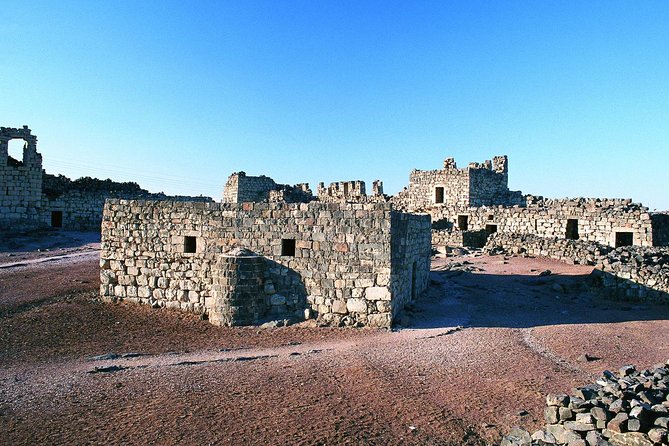
Qasr al-Azraq is the most fortress-like stop on the route. Its dark volcanic stone gives it a heavy, sturdy appearance, quite different from the pale desert setting around it. Plan on about 30 minutes, enough to inspect the walls, entrances, and interior spaces without rushing.
The fort is also linked with T. E. Lawrence, better known as Lawrence of Arabia, who used it as a headquarters during the Arab Revolt. That connection adds modern drama to an older building, but the site’s story reaches much farther back through Jordan’s military and trading past.
You will not find a single, perfectly preserved structure here. Instead, you get a layered ruin where earlier and later periods sit together. The Umayyad use of the site reflects the importance of the eastern routes, while the thick construction shows why this location mattered for control and shelter.
I would begin with the broad shape of the fort, then look at the small details. Notice the stonework, the compact defensive design, and the way the rooms relate to the central spaces. The visit is short, so your driver may give you a general explanation, but do not expect a room-by-room historical lecture unless you arrange a guide.
Qusayr Amra, Jordan’s small frescoed palace
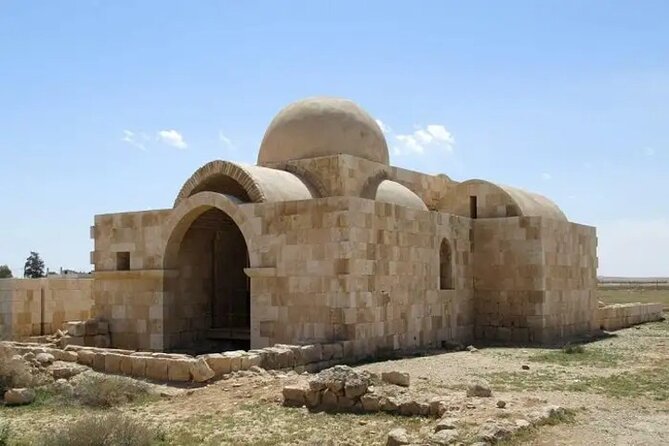
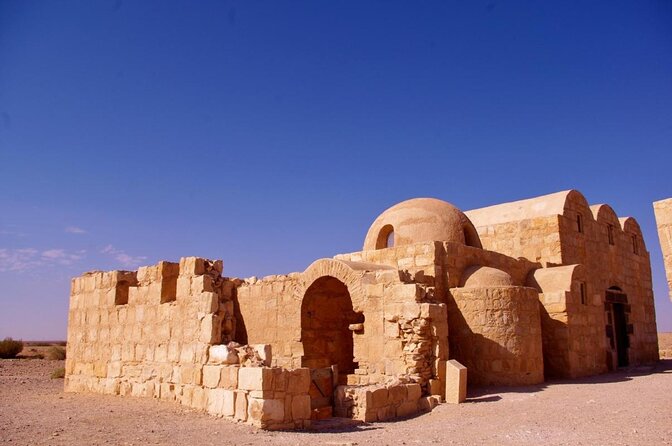
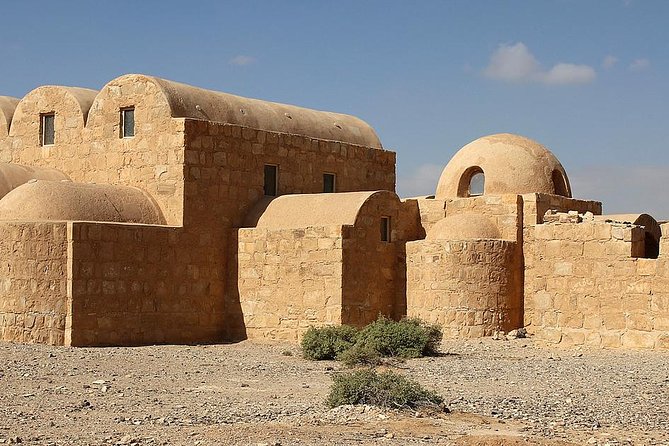
Qusayr Amra is the artistic centerpiece. It is not a giant fortress. The surviving building is a small country retreat from a larger complex, and its modest size makes the painted interior even more striking.
Inside, frescoes cover the walls and vaulted ceilings with scenes of animals, birds, hunting, and human figures. The domed hot room includes a zodiac image, considered one of the earliest surviving representations of a map. These paintings show that early Islamic art was not limited to geometric decoration or calligraphy. The imagery here is lively, worldly, and closely tied to courtly life.
Allow about 30 minutes, though you may want longer if the site is quiet. Take time to look upward. The ceiling is easy to miss if you focus only on the walls, and the small scale of the rooms means a careful look pays off.
This is the stop where a dedicated guide would add the most value. A driver who knows the site can point out the main features, and some visitors have found that enough. Still, the paintings carry layers of meaning that are difficult to grasp from a quick walk-through. If art, architecture, or early Islamic history is central to your trip, ask in advance about guide arrangements.
Admission is not included in the standard arrangement unless you select the option with entry fees. Set aside extra cash or confirm the exact package before departure. That small check prevents an unpleasant surprise at the first ticketed site.
Qasr al-Kharrana and an ancient question
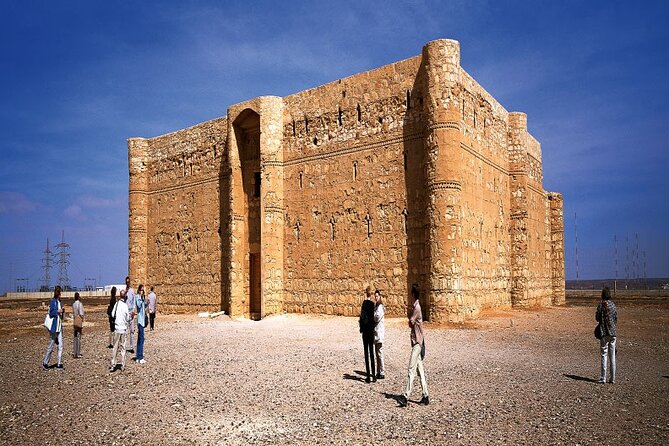
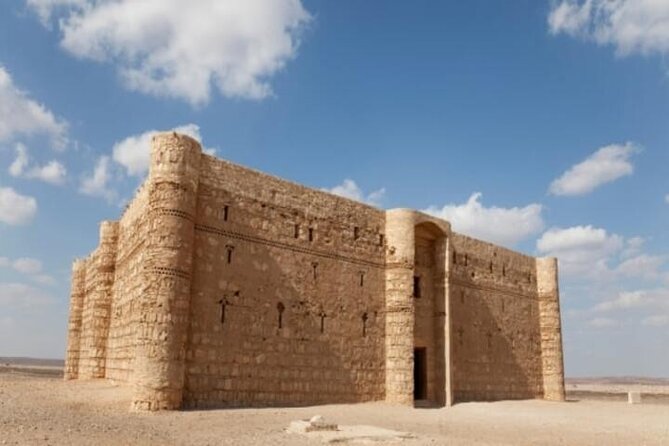
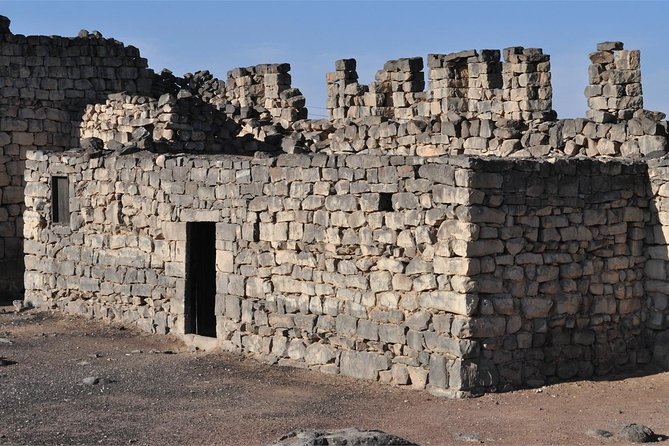
Qasr al-Kharrana has a clean, almost geometric shape. Its square walls, rounded corner turrets, central courtyard, and interior rooms make it one of the most photogenic stops on the circuit.
The mystery is part of its appeal. Historians and archaeologists have debated its original purpose. It may have been a defensive building, a resting place, a meeting site, or a caravanserai. Unlike a traditional fort designed only for battle, its layout suggests that people may have gathered and stayed here as well.
Walk into the central courtyard and examine the rooms around it. Look for the decorative niches and pilasters, which soften the building’s severe exterior. The contrast between plain walls outside and ornamental details inside helps explain why the structure remains interesting even without a settled answer about its use.
You will have roughly 30 minutes. That is enough for a first look, but it is not a long archaeological visit. The building is atmospheric rather than packed with objects or displays. You come for the form, setting, and unanswered questions.
Same country, a completely different kind of day:
- From Amman: Petra and Wadi rum Full day Tour
★ 5.0 · 538 reviews - 2-Day Petra, Wadi Rum and Dead Sea Tour from Amman
★ 5.0 · 467 reviews - 3-Day Private Tour from Amman: Petra, Wadi Rum, Dana, Aqaba, and Dead Sea
★ 5.0 · 425 reviews - Petra Full-Day Private Tour from Amman
★ 4.9 · 392 reviews
The Cave of the Seven Sleepers and its lasting legend
The final stop is the Cave of the Seven Sleepers, also known as Ashabul Kahf or Ahl al Kahf. According to the old story, seven Christian men and their dog fled persecution under the Roman Emperor Trajan. They slept in the cave for 309 years and awoke in a period when their beliefs were no longer a reason for persecution.
The cave is small, but its importance is not based on size. Tombs and remains can still be seen inside, and ruins surround the site. The setting connects religious tradition with physical evidence, though you should approach the story as a legend rather than expect a conventional museum presentation.
A local man at the cave may explain much of the story, adding context that your driver may not provide. The site can feel more personal than the larger castles because the focus is on a sacred narrative, visible tombs, and the narrow cave itself.
The order of this stop can change. One driver adjusted the route to begin here on Friday, when the normal schedule could affect the day. If you are visiting at the end of the week, ask your driver about the planned sequence before setting out.
What the private ride adds to the day
The tour uses a private, air-conditioned vehicle with hotel pickup, fuel costs, bottled water, and onboard Wi-Fi. Only your group takes part, so you do not have to wait for a large coach or follow a fixed group pace.
That matters because the sites are spread out and the tour can run from five to eight hours. You can ask for a short pause, spend more time at a favorite castle, or change the order when practical. The service also makes sense if you are staying in Amman and want to return to the same hotel without handling a remote driving route yourself.
The driver is the key part of the experience. The service promises an English-speaking driver, not a licensed archaeological guide. Several named drivers, including Mohammad Bardaghawi, Danny, Ali Abu Hani, and Mohammed, have been praised for punctuality, flexibility, conversation, and practical help. One driver even helped locate a low-cost local breakfast spot and pointed out the direction of Iraq from the road.
That does not mean every driver will offer the same depth of information. Set your expectations correctly. You are buying transport with local insight, not a scripted lecture at every stop. If you prefer to explore independently and ask questions along the way, this format works well. If you want formal interpretation, arrange a guide or use a detailed guidebook.
Is $83.57 a fair price?
At $83.57 per person, the price is reasonable if you value privacy and convenience. You are covering a long route from Amman, a private vehicle, hotel pickup and return, fuel, bottled water, Wi-Fi, and an English-speaking driver. For a small group, the per-person cost may compare well with arranging separate transport.
The value drops if you mainly want a guide. The standard tour does not include lunch or a local guide, and admission fees are generally your responsibility unless you choose the ticket-inclusive option. Those extra costs should be part of your budget.
The tour is booked well ahead on average, about 58 days in advance. That suggests planning early if this particular date and private arrangement matter to you. The cancellation policy allows a full refund when you cancel at least 24 hours before the start time, but changes or cancellations inside that window are not accepted for a refund.
Who will enjoy this desert history day?
I would choose this tour if you have already seen Amman’s main sights and want a different side of Jordan without committing to an overnight desert trip. It suits anyone interested in early Islamic architecture, Roman religious traditions, military history, or unusual ruins away from the standard route.
It is also a good fit for families or small groups that want their own vehicle. The short visits make the day manageable, and most people can participate. The private setup gives you more control than a scheduled group coach.
I would hesitate if your main goal is a full archaeological lesson. The castles are spread across a broad area, and each stop receives only about 30 minutes in the stated plan. You may leave wishing for more time at Qusayr Amra or more explanation at Qasr al-Kharrana.
Wear practical shoes and bring water, even though bottled water is supplied. Expect sun, stone surfaces, and limited indoor interpretation. A camera is useful, but look first at the carved forms, faded paintings, and courtyard designs before rushing to take pictures.
The bottom line: book it for access, not a formal guided tour
You should book this outing if you want an easy, private way to reach four historic sites that many people skip. The mix is excellent: Azraq brings military stories, Qusayr Amra brings remarkable art, Kharrana brings architectural mystery, and the Seven Sleepers Cave brings living religious tradition.
Book with open eyes about the format. The strongest part is the route and the flexibility of a good driver, not an extensive guided presentation. Confirm whether entry fees are included, ask about the planned order on Friday, and request a guide if detailed interpretation matters to you. For independent-minded visitors who value comfort and lesser-seen history, the $83.57 price offers solid value.
FAQ
How long does the tour take?
The tour lasts approximately 5 to 8 hours, including transport from Amman and visits to four sites.
Where does the tour begin and end?
Pickup and drop-off are provided at your hotel in Amman.
Which sites are included?
The route includes Qasr al-Azraq, Qusayr Amra, Qasr al-Kharrana, and the Cave of the Seven Sleepers.
Is this a private tour?
Yes. Only your group participates in the activity.
Is a guide included?
An English-speaking driver is included. A local guide is not included.
Are admission fees included?
Admission fees are not included in the standard arrangement. An option with entry fees is available, so confirm the option you select when booking.
Is lunch included?
No. Lunch is not included.
What transportation is provided?
You travel in a private, air-conditioned vehicle with hotel pickup, fuel costs, bottled water, and onboard Wi-Fi.
Can I cancel for a full refund?
Yes, if you cancel at least 24 hours before the experience start time. Cancellations or changes made less than 24 hours before the start time are not eligible for a refund.
Just added around Amman
- From Amman/Airport: 3-Night Private Jordan Special Tour★ 5.0 · 3 reviews
- Private Tour: Jerash and Umm Qais Day Trip from Amman★ 4.0 · 3 reviews
- From Amman | Dead sea and Petra in one day | Admission Fees Included★ 5.0 · 3 reviews
- Dead Sea & Jerash Full-Day Private Tour from Amman or Airport★ 5.0 · 3 reviews
- Private Guided Umm Quais and Jerash tour with lunch★ 5.0 · 3 reviews
- 4-Days tour : Jerash, Amman, Petra ,Wadi-rum& Dead-sea.★ 5.0 · 3 reviews
- Private Half-Day Ma’in Waterfalls and Hot Springs Tour from Amman★ 5.0 · 3 reviews
- Private Tour: Full Day Trip of Jerash, Umm Qais, and Pella from Amman★ 4.5 · 3 reviews
Amman Tours, compared.
2-Day Tour: Petra, Wadi Rum, and Dead Sea from Amman
Read our review →
2-Day Petra, Wadi Rum and Dead Sea Tour from Amman
Read our review →
3-Day Private Tour from Amman: Petra, Wadi Rum, Dana, Aqaba, and Dead Sea
Read our review →