Reviewed · AMMAN TOURS
Panorama Jordan Tour 11 Day 10 Nights Tour
Jordan packs an astonishing amount into a small country, and this 11-day private tour takes you from Roman cities and Crusader castles to Petra, desert reserves, and the Dead Sea. The route is busy, but it gives you a broad look at Jordan rather than limiting you to the usual Amman, Petra, and Wadi Rum triangle.
I like the private vehicle and English-speaking driver, which make long transfers easier and let your group keep its own pace. I also like the two full days at Petra, since one visit is rarely enough for the Siq, Treasury, Monastery, churches, tombs, and high trails. The main drawback is the schedule: several days involve long drives and short visits, and the package does not include tips, personal expenses, or optional camel and horse rides.
Key points to know before booking
- Petra gets two days: You have a three-hour guided introduction on the first day, then a second day for independent exploring or optional trails.
- The route covers nearly all of Jordan: Expect Madaba, Mount Nebo, Karak, Dana, Little Petra, Wadi Rum, the Dead Sea, Salt, Jerash, Amman, and the eastern desert.
- Wadi Rum is a proper desert outing: A Bedouin guide leads a four to five-hour Jeep tour with tea, family hospitality, and a box lunch.
- Dana adds walking and village life: The easy, two-kilometer Dana Village Tour passes gardens, Ottoman buildings, and craft workshops.
- The price includes much of the costly groundwork: At $1,641.03 per person, lodging, breakfasts, selected dinners and lunch, transfers, entrance fees, guides, and visa assistance are arranged.
- This is a private trip, not a coach circuit: Only your group participates, though the number of people in your party is not specified.
Why this route works for a first trip to Jordan
The route has a smart north-to-south rhythm. You begin with Amman, then follow the old Kings Highway toward Petra, continue to Wadi Rum and the Dead Sea, and finish with northern and eastern Jordan before returning to Amman.
That order gives you variety. One day may feature Byzantine mosaics and biblical viewpoints. Another brings Roman columns, black basalt castles, or a Bedouin Jeep ride over red sand. You are not simply checking off famous sights. You get a look at Jordan as a country of several distinct regions.
The private format matters here. Jordan’s major sites are spread out, and some transfers take hours. Having one arranged vehicle removes the need to work out taxis, intercity buses, or separate site transfers. You can also carry water and day bags in the vehicle, with mineral water provided.
Still, this is not a slow holiday. The program has a full day in Petra, another full Petra day, a desert outing, a Dead Sea overnight, and several sightseeing days with multiple stops. If you like seeing a lot in one visit, the pace is useful. If you prefer lingering in one town, you may want to cut a few stops.
A few more Amman trips to weigh up
- Amman: Petra, Wadi Rum, and Dead Sea 2-Day Tour
★ 4.9 · 1,173 reviews - 2-Day Tour: Petra, Wadi Rum, and Dead Sea from Amman
★ 5.0 · 1,141 reviews - From Amman: Petra & Wadi Rum Private or group Day Tour
★ 4.9 · 750 reviews
Arrival in Amman and the first practical details
On arrival at Queen Alia Airport, a representative meets you before Visa Control with a sign bearing your name. The representative handles the paperwork for the free Jordanian visa, provided your passport details are supplied in advance, then takes you to your driver.
That is a welcome service after a flight. You do not need to work out airport transport or find the right immigration procedure alone. The transfer to Amman takes about 30 minutes, followed by your first hotel night.
Four nights in Amman are included across the trip. That gives you a useful base at the beginning or end, though the itinerary uses Amman as a practical overnight point as much as a city to explore.
Madaba, Mount Nebo, and Karak on the Kings Highway
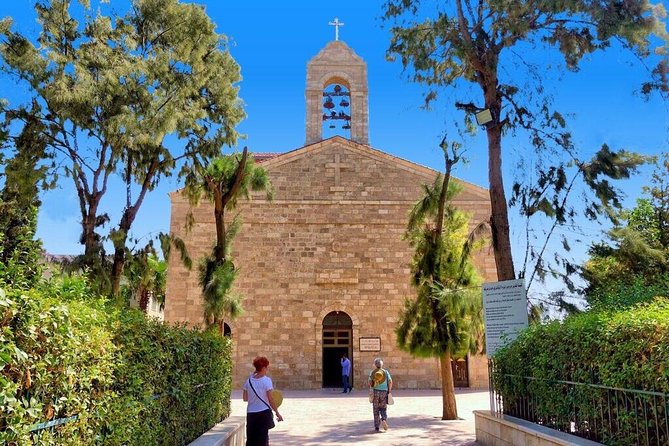
Day two leaves Amman for Petra by way of the Kings Highway, an old route through Jordan’s central hills. The first stop is Madaba and its famous sixth-century mosaic map of Jerusalem and the Holy Land.
The map was made from about two million pieces of colored local stone. Only about a quarter of the original panel remains, but the surviving sections still show hills, valleys, settlements, and the Nile Delta. It lies in the Greek Orthodox Church of St. George, built in 1896 over an earlier Byzantine church.
This is a compact stop, listed at about 40 minutes, so do not expect a long museum visit. Its value is in seeing how early Christian mapmakers pictured the region, not in wandering through a large complex.
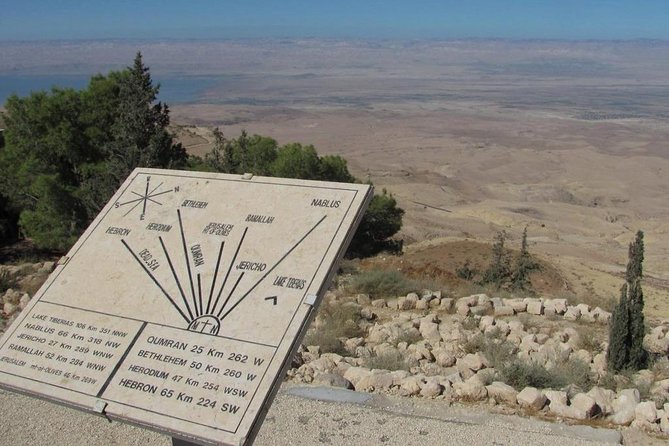
Mount Nebo follows. Tradition says Moses stood here and looked toward the Promised Land. On a clear day, you can see over the Dead Sea and as far as Jerusalem. Weather controls the view, so treat the panorama as a bonus rather than a guarantee.
The drive continues to the Wadi Mujib viewpoint, often called Jordan’s Grand Canyon. The stop is about the view into the broad valley, not a canyon hike. At Karak, you visit the large Crusader castle built in 1132 or 1134 by King Baldwin I of Jerusalem.
The castle is a strong contrast to Madaba’s mosaic and Mount Nebo’s religious meaning. Its walls and hilltop setting help explain the military importance of the Kings Highway. The visit lasts about 45 minutes, which allows a look around but not a slow architectural study.
You finish the day in Dana. It is a long sightseeing day, so comfortable shoes and water will help.
Dana and Little Petra, with a taste of rural Jordan
Dana offers a change of pace. After breakfast at camp, you take the self-guided Dana Village Tour. The trail is graded easy, covers two kilometers, and operates year-round between 8 a.m. and 3 p.m. from the Dana Guesthouse.
The walk passes above the village, through terraced gardens, local craft workshops, and original Ottoman-era buildings. This is one of the most useful parts of the trip for seeing daily life beyond major monuments. You can meet residents and learn about Dana’s past without needing a strenuous trek.
The walk takes about an hour, but allow extra time if you want to look at the workshops or pause for views. The term self-guided is important: you are not getting a dedicated walking guide here.
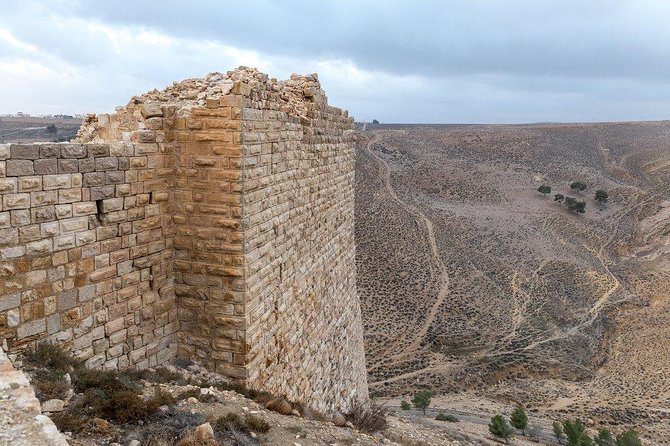
Next comes Shobak Castle, a more ruined Crusader fortress than Karak. The attraction is its high position above surrounding valleys as much as the surviving stonework. The stop is only about 30 minutes, so think of it as a sharp scenic pause rather than a detailed castle visit.
The afternoon belongs to Al-Beidha, better known as Little Petra. The site contains Nabatean dining rooms called tricliniums and bicliniums, along with the last known surviving Nabatean fresco work on the ceiling of one biclinium. Three hours gives you time to study the carved spaces and understand that Petra’s wider settlement extends well beyond the famous Treasury.
Little Petra is also a useful introduction to Nabatean architecture before the main Petra visit. Its smaller scale can make the carved chambers easier to appreciate. The drawback is that the day combines a village walk, castle, and archaeological site, so you may arrive tired.
Same country, a completely different kind of day:
- From Amman: Petra and Wadi rum Full day Tour
★ 5.0 · 538 reviews - 2-Day Petra, Wadi Rum and Dead Sea Tour from Amman
★ 5.0 · 467 reviews - 3-Day Private Tour from Amman: Petra, Wadi Rum, Dana, Aqaba, and Dead Sea
★ 5.0 · 425 reviews - Petra Full-Day Private Tour from Amman
★ 4.9 · 392 reviews
Two days in Petra, the strongest part of the program
Petra receives the most attention, as it should. On the first day, an English-speaking guide leads a three-hour tour through the Siq and the main central route.
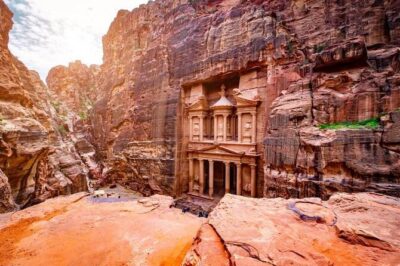
The Siq is a 1.2-kilometer chasm leading into the ancient Nabatean capital. Along the way, you pass shrines, tombs, and carvings before reaching the Treasury. The first view of its carved facade is one of Jordan’s great travel moments, but the Treasury is only the beginning.
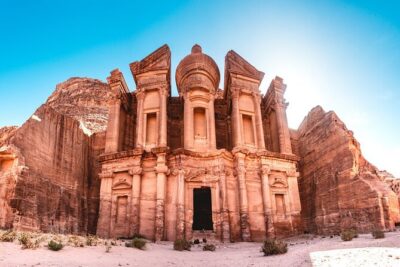
The guided route continues through the Street of Facades, Roman Theatre, and Colonnaded Street, ending at Qasr Bint. After the guided portion, you have free time to continue independently. You might visit the Byzantine Church or the Temple of the Winged Lion. You can also climb about 800 steps to the Monastery, or take the shorter climb toward the High Place of Sacrifice.
The second Petra day is a major advantage. You can return on your own or choose optional guided trails. Use this day for the area you could not reach on the first visit, or simply slow down and revisit the central monuments without a guide setting the pace.
Plan for full days. The first Petra visit is listed at about seven hours and the second at about eight. Sun, heat, dust, and uneven ground are part of the experience. The tour description only requires moderate physical fitness, but the Monastery and High Place climbs demand more effort than the central route.
A practical point: horse carriage rides and camel rides are not included. Tips for the guide and driver are also separate, so include those costs in your budget.
Wadi Rum by Bedouin Jeep
After Petra, your driver takes you about 1.5 hours to Wadi Rum. At Wadi Rum Village, an English-speaking Bedouin guide meets you and leads a four to five-hour Jeep tour.
The outing includes tea and coffee, a chance to meet the guide’s family, and a box lunch during the drive. That personal contact gives the day more meaning than simply being driven from one photo stop to another. The itinerary specifically includes Bedouin hospitality, so you should expect a social welcome as well as a desert excursion.
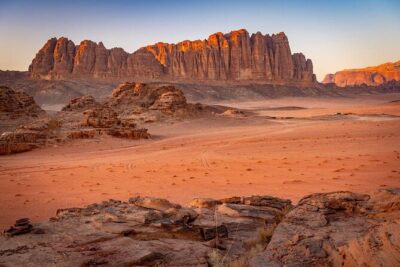
The listed stops include the Nabatean Temple, Lawrence Spring, sand dunes, Khazali Canyon, Little Bridge, Um Frouth Rock Bridge, Lawrence House, and the Burdah Rock Bridge or Arch, along with other points.
The Jeep tour follows the desert associations of Lawrence of Arabia, but the best reason to go is the combination of open space, rock formations, inscriptions, and Bedouin guidance. Some stops involve climbing or walking on sand and rock, so sturdy footwear is sensible.
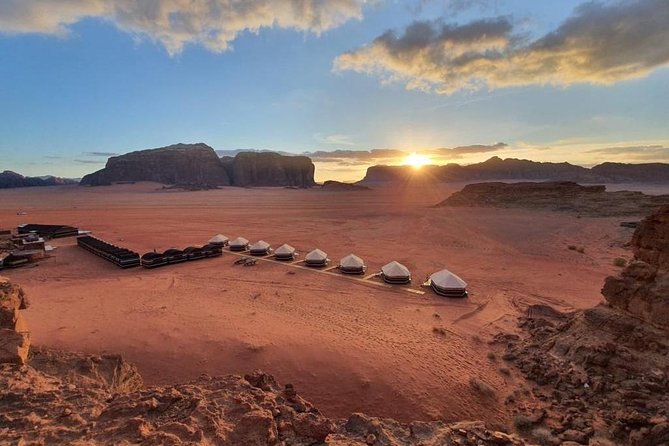
You spend one night at a Wadi Rum camp, with dinner, breakfast, and lunch included. Camp conditions can differ, and the supplied information does not specify the tent style or private bathroom arrangements, so ask the operator for those details before paying if comfort matters to you.
A quiet Dead Sea stop after the desert
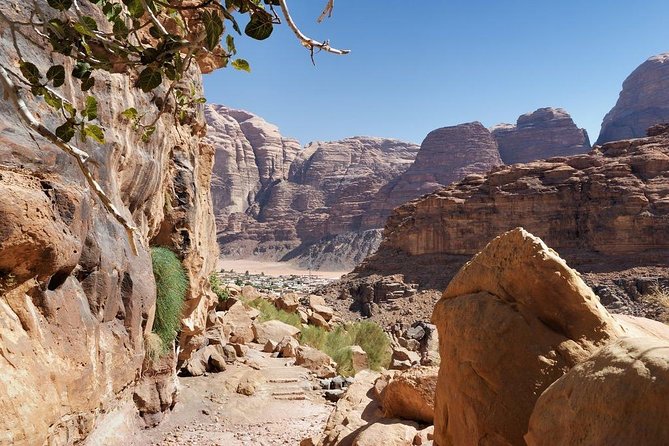
The next morning begins with breakfast at camp and a transfer along the Dead Sea Highway to the hotel area. One night at the Dead Sea is included, with breakfast.
This part of the trip is deliberately light on sightseeing. After Petra and Wadi Rum, the pause is useful. You have time to rest at the hotel area, though the package description does not specify a spa treatment, private beach access, or other resort features. Check what your chosen property provides if floating in the Dead Sea is a priority.
The Dead Sea is also a low point on Earth, but no separate excursion is listed. You should view this overnight as relaxation time rather than a guided attraction day.
Salt and Jerash, two very different northern stops
Day eight travels north to Salt, a town known for late Ottoman-era houses, long-arched windows, and old commercial streets. A walk along Hammam Street takes you past small shops selling food, produce, clothes, household goods, perfumes, sweets, bedding, and handmade crafts.
Al Ein Plaza is described as the heart of town. You may see older men playing Manqala, a traditional game, and hear the call to prayer. This is one of the more everyday stops on the route. It is less polished than a major archaeological site, which is exactly its appeal.
You have about three hours in Salt. Wear shoes suited to streets that may rise and fall, and leave room for browsing or tasting local food. The program does not list specific food tastings, so any purchases are personal expenses.
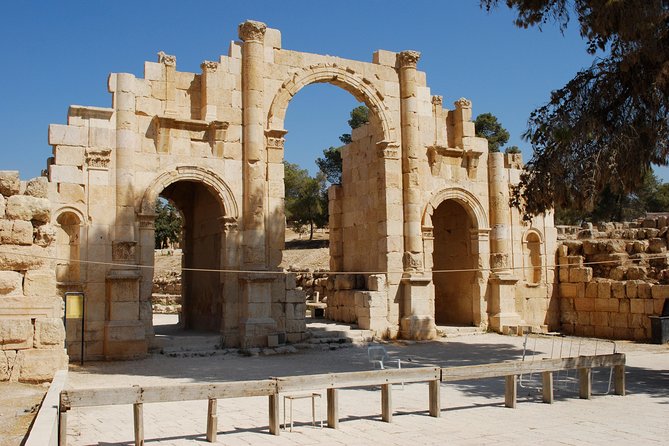
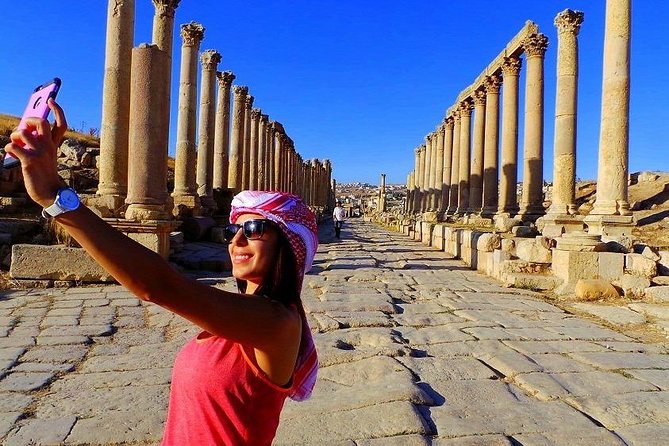
Jerash then shifts the mood completely. The city was one of the Decapolis cities and became prosperous under Roman rule. Its remains include Hadrian’s Arch, a Hippodrome that held about 15,000 spectators, the Forum, the Temple of Artemis, the Colonnaded Street, and the Nymphaeum.
An English-speaking guide leads a 1.5-hour tour, within a two-hour visit. The scale of Jerash is impressive, especially the columns of the Temple of Artemis, some about 12 meters high. The site is broad, so the guide helps you connect the remains rather than simply photographing isolated columns.
You return to Amman for the night. Salt and Jerash work well together because one shows a living town and the other presents a major Roman site.
Eastern desert castles and Shaumari Reserve
Day nine heads into Jordan’s Eastern Desert to see three Umayyad-era castles. Qusayr Amra is the most unusual. It was an Umayyad hunting retreat and is known for eighth-century frescoes showing music, hunting, wine, and nude figures.
Qasr Kharana is a two-story structure where Mesopotamian, Arabic, and Greek influences meet. Qasr al-Azraq is built from black basalt and is linked in modern times with T. E. Lawrence, who used it as a headquarters.
The three-castle visit takes about three hours. These buildings are not all grand palaces. Their value lies in the questions they raise about trade routes, desert travel, rulers, and artistic influences. The wide drive to reach them is part of the day, so this outing suits you if you enjoy history beyond the headline sites.
In the afternoon, Shaumari Nature Reserve provides a wildlife focus. The reserve was created to breed and return endangered species to the region, including Arabian oryx, Persian onagers, Dorcas gazelles, and houbara bustards.
A short safari lasts about one to 1.5 hours. Sightings are not guaranteed, but the reserve gives the visit a conservation purpose rather than presenting animals only as an attraction. Admission and the safari are included.
Amman’s Citadel, mosque, and Roman theatre
Your final sightseeing day is a six-hour Amman city tour. You begin at King Abdullah Mosque, completed in 1989 as a memorial to King Hussein’s grandfather. Its blue dome is one of the city’s best-known sights, and it is the only mosque in Amman that openly welcomes non-Muslim visitors.
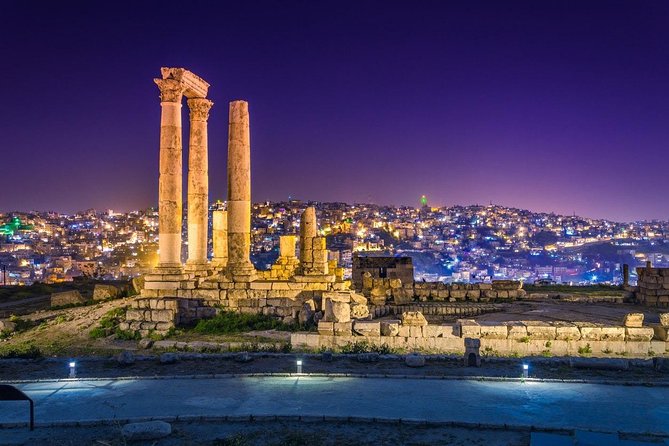
Dress respectfully, and remember that a mosque visit is a religious experience as well as a sightseeing stop. The tour then climbs to the Amman Citadel, 132 meters above the city center. Ruins include the Temple of Hercules and an Umayyad palace.
The Roman Amphitheatre is another major stop. It is considered one of the largest in the Middle East and gives you a strong sense of ancient Philadelphia, the Roman city beneath modern Amman. The tour is listed as admission included, though the supplied schedule does not name a separate local guide for Amman.
This is a good final day because the city pulls together themes from the rest of the trip: Roman building, Islamic architecture, and modern Jordanian life. The following morning, your driver transfers you to Queen Alia Airport.
What the $1,641.03 price really covers
At $1,641.03 per person, the value depends on what you would otherwise need to arrange yourself. The price includes ten nights of accommodation, ten breakfasts, two dinners, lunch, a Wadi Rum box lunch, airport meet-and-assist, visa fees for eligible passports, private transfers, entrance fees listed in the schedule, mineral water, a Petra guide, a Jerash guide, the Wadi Rum Jeep tour, and the Shaumari safari.
Four nights are in Amman, one in Dana, three in Petra, one in Wadi Rum, and one at the Dead Sea. That hotel distribution reduces the strain of changing lodging every night while keeping you close to the main sights.
The private vehicle is likely the largest convenience. You avoid arranging separate transport for remote castles, Dana, Wadi Rum, Shaumari, and the Dead Sea. An English-speaking driver assists throughout, but the driver is not the same as a full-time archaeological guide. Dedicated guiding is specifically included in Petra for three hours and Jerash for 1.5 hours.
You still need money for tips, personal purchases, and optional horse or camel rides. Confirmation is subject to availability. Cancellation allows a full refund when made at least six full days before the start, with smaller or no refunds closer to departure. Bad weather or an unmet minimum may lead to another date or a full refund.
Who should book this Jordan tour?
I would choose this trip if you want one organized package that covers Jordan’s major landmarks plus Dana, Salt, the Eastern Desert, and Shaumari. It suits first-time visitors who value a private car, arranged hotels, and help at the airport more than complete independence.
It also fits people who want a broad cultural mix: Christian mosaics, biblical sites, Crusader castles, Nabatean ruins, Roman cities, Islamic architecture, Bedouin culture, wildlife conservation, and desert scenery.
I would hesitate if you want a relaxed schedule, luxury accommodation details confirmed in advance, or long guided time at every site. Before booking, ask for the exact hotel names, room arrangements at Wadi Rum, what optional Petra trails cost, and whether a particular staff member such as Aida, Hisham, or Suleiman will handle your trip. Those names are associated with planning, local insight, and ground operations, but staff assignments should be confirmed rather than assumed.
For the right pace, this is a strong-value way to see Jordan. You get the essential Petra and Wadi Rum experiences, but you also see places many short itineraries skip. Just arrive ready for early starts, long road days, uneven walking, and a few expenses beyond the advertised price.
FAQ
How long is the Panorama Jordan Tour?
The tour lasts approximately 11 days and includes 10 nights of accommodation.
Is this a private tour?
Yes. Only your group participates in the activity, and transfers are provided by private vehicle with an English-speaking driver.
What meals are included?
The package includes breakfast for all 10 nights, two dinners, lunch, and a box lunch during the Wadi Rum Jeep tour. Personal expenses are not included.
Is the Jordan visa included?
Visa fees are included for the free Jordanian visa, but passport details must be provided in advance.
How much guided time is included at Petra?
An English-speaking guide leads a three-hour tour on the first Petra day. The second Petra day is for independent exploration or optional guided trails.
How long is the Wadi Rum Jeep tour?
The Bedouin-led Jeep tour lasts about four to five hours and includes stops such as Khazali Canyon, Lawrence Spring, sand dunes, and rock bridges.
Is the Dana walk difficult?
The Dana Village Tour is self-guided, graded easy, and covers two kilometers. It takes about an hour, with operating hours listed from 8 a.m. to 3 p.m.
What is not included in the price?
Tips for guides and the driver, horse carriage rides, camel rides, and personal expenses are not included.
Just added around Amman
- From Amman/Airport: 3-Night Private Jordan Special Tour★ 5.0 · 3 reviews
- Private Tour: Jerash and Umm Qais Day Trip from Amman★ 4.0 · 3 reviews
- From Amman | Dead sea and Petra in one day | Admission Fees Included★ 5.0 · 3 reviews
- Private Guided Umm Quais and Jerash tour with lunch★ 5.0 · 3 reviews
- Dead Sea & Jerash Full-Day Private Tour from Amman or Airport★ 5.0 · 3 reviews
- Private Half-Day Ma’in Waterfalls and Hot Springs Tour from Amman★ 5.0 · 3 reviews
- 4-Days tour : Jerash, Amman, Petra ,Wadi-rum& Dead-sea.★ 5.0 · 3 reviews
- Private Tour: Full Day Trip of Jerash, Umm Qais, and Pella from Amman★ 4.5 · 3 reviews
Amman Tours, compared.
2-Day Tour: Petra, Wadi Rum, and Dead Sea from Amman
Read our review →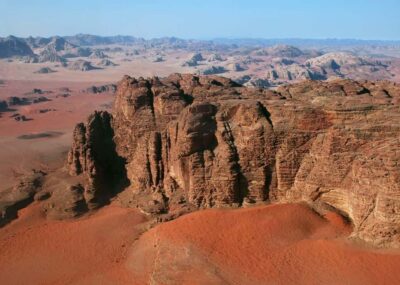
2-Day Petra, Wadi Rum and Dead Sea Tour from Amman
Read our review →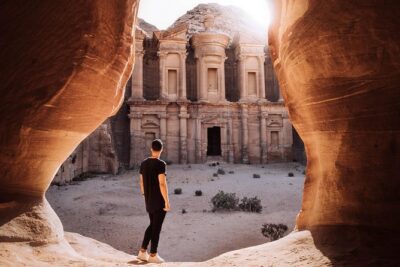
3-Day Private Tour from Amman: Petra, Wadi Rum, Dana, Aqaba, and Dead Sea
Read our review →