
Reviewed · AMMAN TOURS
From Amman: Jerash, Umm Qais, and Jesus’ Cave Private Trip
Northern Jordan packs a surprising amount into one long day. You move from the vast Roman streets of Jerash to Umm Qais, where ancient columns share the hill with an abandoned Ottoman village and views toward Jordan, Syria, Israel, and the Palestinian Territories. The nearby cave associated with Jesus adds a quieter, religious stop.
I like the private car and hotel pickup, since you avoid waiting for a large group and can ask for practical stops along the road. I also like the drivers’ personal touch. Omar stopped at viewpoints and an olive-oil pressing, while Wail helped organize the order of the day and recommended a good restaurant in Jerash.
The catch is the pace. Ten hours sounds generous, but this is a full road day with extensive walking at the ruins. Lunch, entrance fees, and a local guide depend on the option you choose, so check the final price before booking.
Key points to know before you book
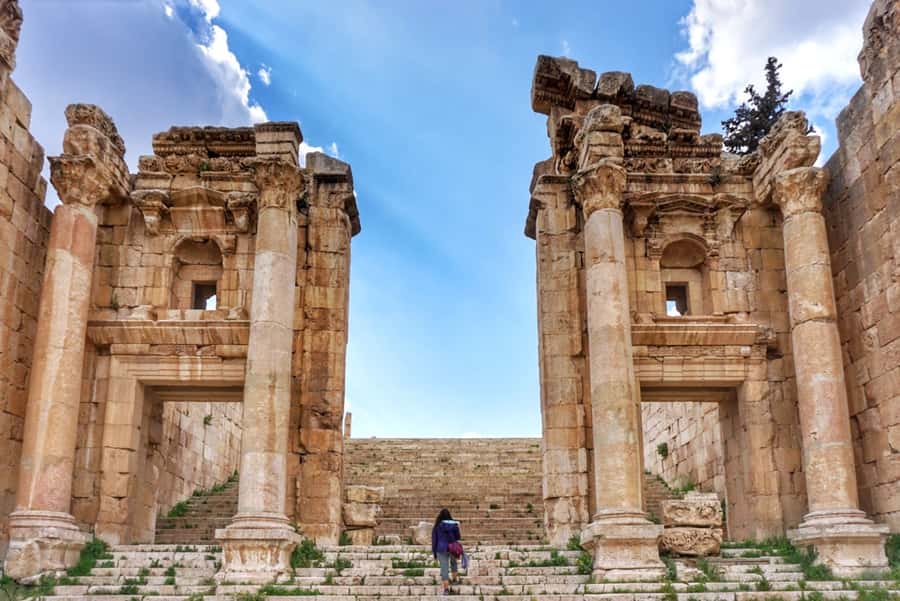
- Three very different stops in one day: Roman Jerash, panoramic Umm Qais, and a small cave tied to Christian tradition.
- Private transport from Amman: You travel in an air-conditioned vehicle with an English-speaking driver, WiFi, and bottled water available onboard.
- Umm Qais brings the big views: The hilltop site looks across several modern borders and combines Roman ruins with an Ottoman-era village.
- Jerash needs walking time: Allow about two and a half hours for columns, plazas, temples, arches, and broad paved paths.
- The cave visit is brief and reflective: Plan roughly 25 minutes at the cave linked by local belief to Jesus.
- Add-ons change the value: Entry tickets, lunch, and a guide can be included, or may need to be arranged separately.
Why this northern Jordan day trip works
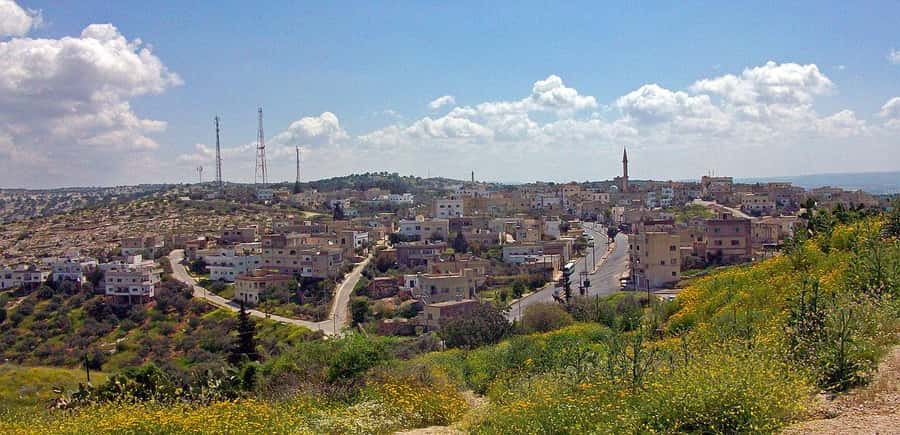
This tour is built for you if you want to see more than Amman without arranging several separate day trips. Jerash and Umm Qais are both important archaeological sites, but they feel quite different. Jerash is open, grand, and strongly Roman in character. Umm Qais is more atmospheric, with ruins, stone buildings, and a wide view over the north.
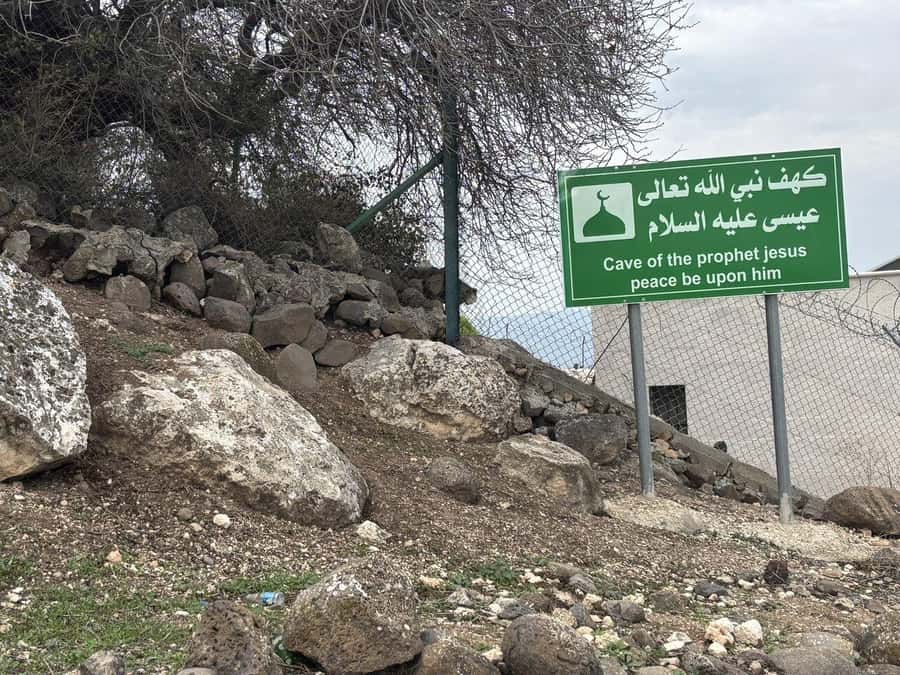
The third stop, Jesus’ Cave, is not another major archaeological complex. It is a small religious site connected to a local tradition that Jesus stayed there while visiting Umm Qais and trying to turn its people away from paganism. That makes it meaningful for some visitors, but less compelling if you want only large monuments and formal museum sites.
You get a private group rather than a shared coach. That matters on a 10-hour outing. You can ask questions, keep your own pace, and avoid collecting strangers from several hotels. The driver waits in your hotel lobby with a sign bearing your name, but you should contact the supplier the day before with your exact pickup address and preferred timing.
More Jerash and Ajloun trips:
- Full-Day Tour: Umm Qais, Jerash, and Ajloun from Amman
★ 5.0 · 162 reviews - Private Tour of Ajlun and Jerash
★ 5.0 · 130 reviews - Jerash, Ajloun, Umm Qais Day Trip
★ 5.0 · 99 reviews
Umm Qais and the view across three countries
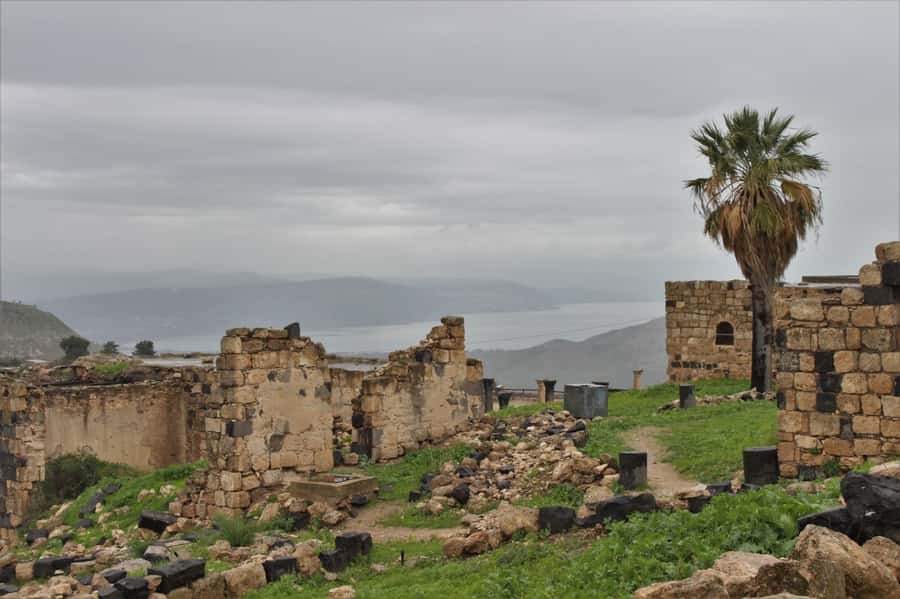
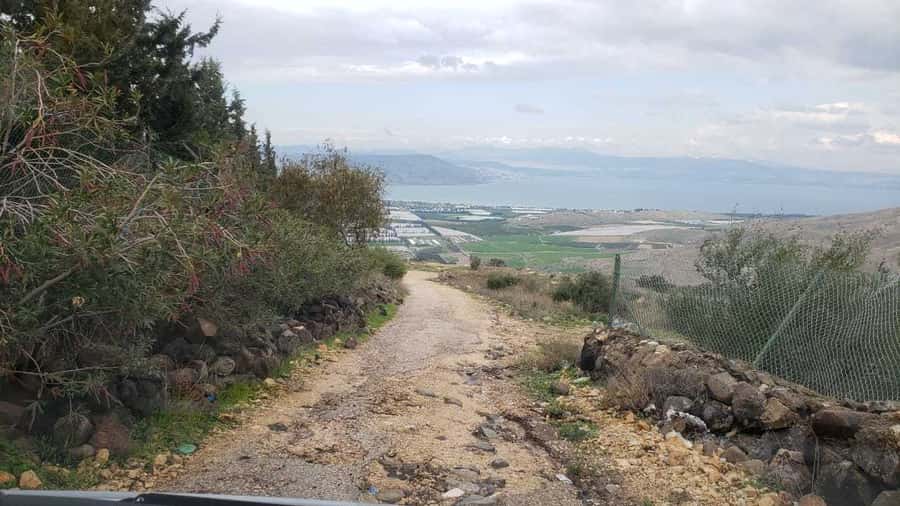
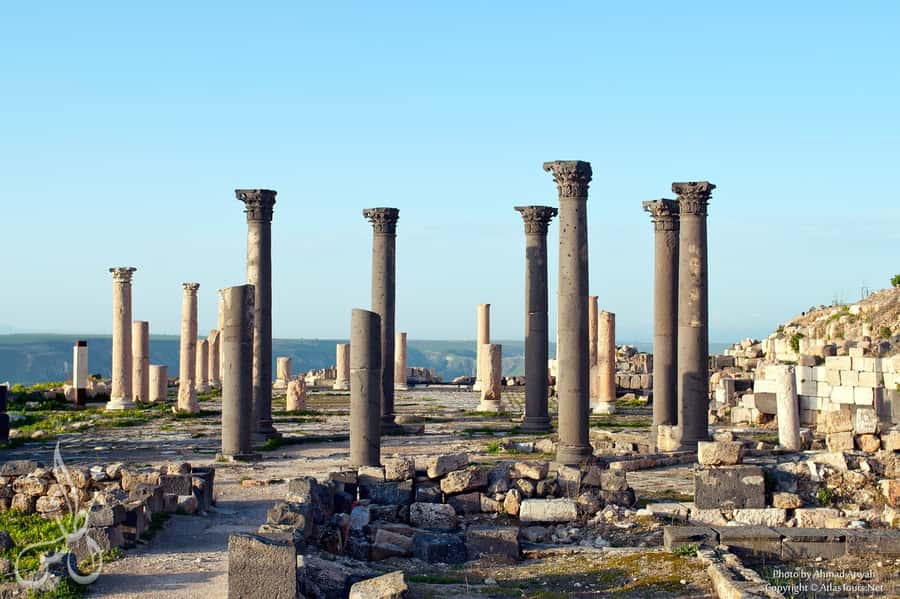
Umm Qais, the modern name for ancient Gadara, is the first major stop in the stated route. It sits on a high ridge in northern Jordan, and the view is one of the main reasons to make the long trip from Amman.
From the site, you can look toward Jordan, Syria, Israel, and the Palestinian Territories. The exact view depends on the weather, but the setting gives you a clear sense of how close these places are to one another. This is not just a postcard stop. It helps explain why northern Jordan has mattered for trade, faith, and politics for so long.
The ruins belong to the ancient Decapolis world, a group of Greco-Roman cities in the region. You will see the remains of a city that once had a strong Greek and Roman identity, now set beside the stone remains of a later Ottoman village. That contrast is the special feature here. Ancient columns and classical masonry sit near more recent homes that were eventually abandoned.
I would give Umm Qais your attention rather than treating it as a quick photo stop. Walk slowly, look at the stonework, and take time at the viewpoints. The site can feel exposed, so sunscreen, sunglasses, and a hat are useful, especially in warm weather. Comfortable shoes matter here as much as at Jerash.
One practical point: the experience is listed with about two hours for this stop, including walking and scenic views. That is enough for a good first look, but not enough for a leisurely archaeological study of every corner. If Umm Qais is your main reason for booking, ask in advance how much time your driver plans to allow.
Jesus’ Cave, a short stop with a local tradition
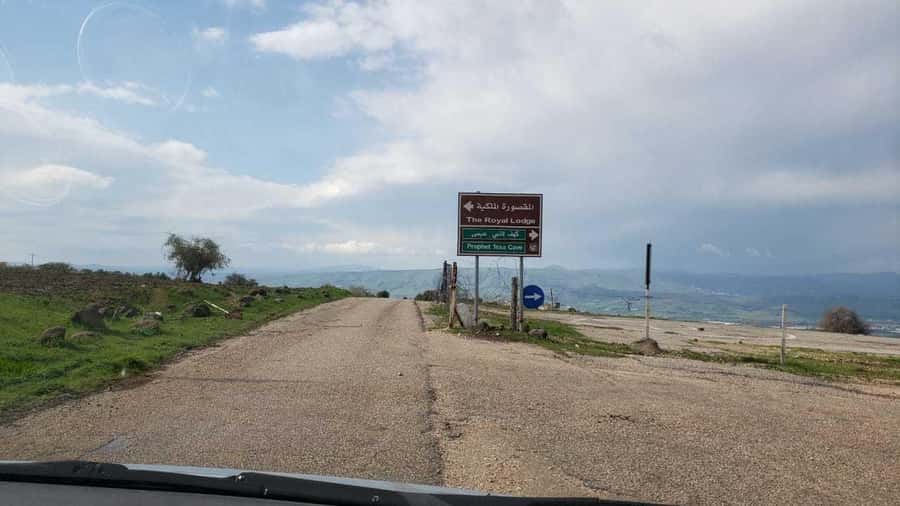
About three miles south of Umm Qais is the cave associated with Prophet Jesus. Local people believe Jesus stayed here during his travels to Umm Qais. The tradition connects the cave with his efforts to release the city’s people from paganism.
The visit lasts about 25 minutes, so adjust your expectations. This is a brief stop for a look, a few photographs, and a moment of quiet. It is not presented as a large visitor center or a long guided religious program.
I see the cave as a useful pause between two major ruins. After the broad views and exposed stonework at Umm Qais, the smaller site changes the mood. You can reflect on the connection between place, faith, and oral tradition without needing much time.
The cave may be most worthwhile if you have an interest in Christian history or local religious customs. If your priority is architecture, you may find the stop modest. Its value comes from the story attached to it, not from the size of the site.
Jerash and its great oval plaza
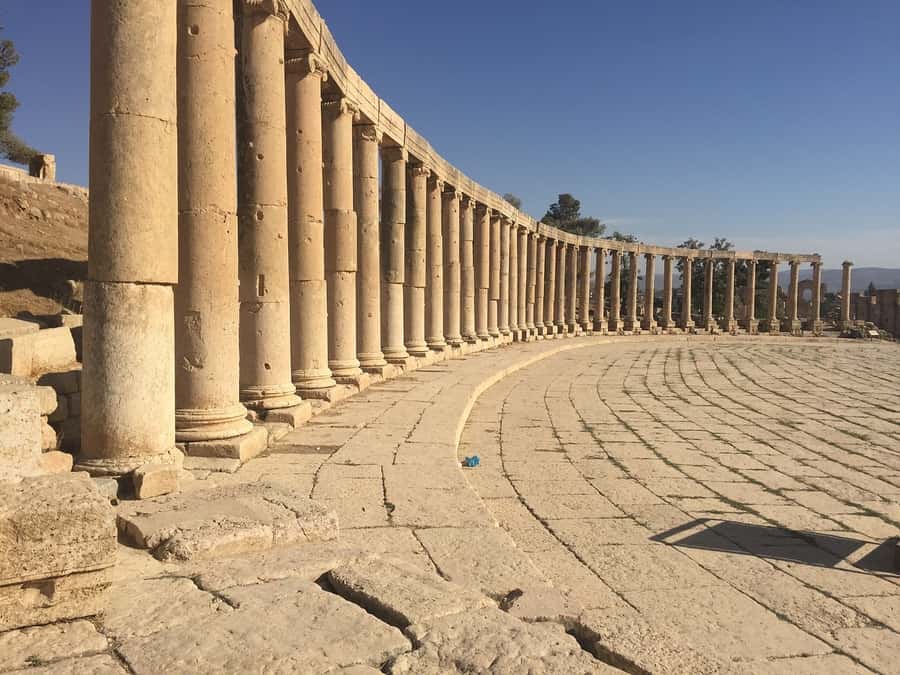
Jerash is the heavyweight stop of the day. It is one of the best-preserved Greco-Roman cities in the Middle East, and the scale becomes clear as soon as you reach its monumental remains.
The city began as a Bronze Age settlement and later became part of the Greek world before growing under Roman rule. It also developed under Christian and Muslim rule, then declined after the Crusades. You are not simply looking at one frozen Roman scene. You are seeing layers of a city that changed over many centuries.
The oval plaza is the image most associated with Jerash. Its broad shape and surrounding columns give you an immediate sense of Roman urban design. From there, the colonnaded streets lead your eye through the ruins and help you picture how people once moved through the city.
Look for the Temple of Artemis, one of the site’s major landmarks. Hadrian’s Arch is another key feature, built to mark an imperial visit. The Forum, the oval plaza, columns, and ceremonial avenues create the grand scale that makes Jerash such a strong counterpart to the quieter remains at Umm Qais.
The itinerary allows about two and a half hours at Jerash, followed by roughly 90 minutes for lunch. That should give you enough time for the main monuments, though you will still be walking steadily. There is no reason to expect every corner of the site to receive equal attention in that time.
A local guide is an important choice here. The driver can give you directions and useful information, but a dedicated guide can explain what the buildings were used for and how the city developed. The guide option is separate in some bookings, so confirm whether it is included in your selected package.
More Umm Qais trips:
- From Amman: Private Jerash, Ajloun Castle, and Umm Qais Tour
★ 4.9 · 82 reviews - From Amman: Private Full Day Tour Jerash Ajloun & Um Qais
★ 5.0 · 77 reviews - Day Tour Jerash, Ajloun and Umm Qais From Amman
★ 5.0 · 54 reviews - Private Day Trip to Jerash, Umm Qais and Ajloun Castle from Amman
★ 5.0 · 51 reviews
What the private driver adds
The driver is more than a person behind the wheel, although that role alone matters on a long day. You spend hours on the road between Amman and northern Jordan, so a courteous, reliable driver makes a real difference.
Several named drivers have received strong praise for being friendly, professional, and attentive. Wail organized the day carefully, recommended a restaurant in Jerash, and kept the outing running smoothly. Omar added extra viewpoints and stopped at an olive-oil pressing. Mohamed was described as a gentleman who explained the day well and offered extra food. Bardaghawi was praised for maintaining a high level of attention through an eight-hour stretch.
Those details tell you what to look for from this type of service. The driver may help with timing, point out roadside sights, and suggest food or coffee stops. One person even arranged coffee, juice, and sandwiches before being asked. These extras are not guaranteed, but they show why a private vehicle can feel more personal than a basic transfer.
You should still separate the driver’s role from that of a licensed site guide. A driver may offer useful explanations, but the local guide add-on is the better choice if you want detailed interpretation at Jerash or Umm Qais.
Lunch, food, and the long road home
Lunch is scheduled at Jerash for about an hour and a half, but food is not automatically included in every version of the tour. You can choose an option that includes lunch, or you may need to pay for it separately.
This is worth checking before departure. One day went badly for a hungry passenger because there was no chance to buy food when expected. That is an easy problem to avoid. Confirm the lunch arrangement, and carry a small snack if you are unsure. Bottled water is available onboard, but food planning remains your responsibility unless lunch is part of your package.
A driver may suggest a restaurant, as Wail did, and that can be useful when you do not want to spend time comparing menus after a long visit to Jerash. Still, a restaurant recommendation is not the same as a guaranteed meal included in the price.
After lunch, you return to Amman. The trip ends with drop-off at your hotel, which is convenient after a day that includes several hours in the vehicle and a great deal of walking.
Is $87 good value?
At $87 per person, the value depends on how many people are in your private group and which add-ons you select. The base price gives you private air-conditioned transport, hotel pickup and drop-off, an English-speaking driver, WiFi, and bottled water onboard.
For a solo visitor or couple, the cost may feel high compared with joining a larger group. You are paying for privacy, direct pickup, and a flexible day rather than simply buying admission to three sites. For a small family or group of friends, the per-person price becomes easier to justify because the vehicle and service are shared among you.
Entry fees, lunch, and a local guide may be added separately. Compare the full checkout total, not just the advertised starting figure. A guide can improve Jerash considerably, while lunch is mainly a convenience. If you already have a Jordan Pass, check which admissions it covers before paying for entry again.
The Jordan Pass is worth investigating before you arrive. It can cover the visa fee on arrival and provide access to many major Jordanian attractions. The savings depend on your wider Jordan itinerary, but it is especially useful if you plan to visit several paid sites beyond this day trip.
Timing, walking, and what to bring
The tour lasts 10 hours, so begin with realistic expectations. This is not a relaxed village outing. It is a long northern loop with two major archaeological sites, a short cave visit, lunch, and the return drive.
Wear shoes you can walk in comfortably. Jerash covers a large area, and Umm Qais also requires walking over archaeological ground. Sunscreen, a hat, and sunglasses are sensible in warm months because much of the visit takes place outdoors.
Bring your passport or ID card. The activity is wheelchair accessible, but the archaeological sites themselves can include uneven surfaces and long routes. If mobility is a concern, discuss the practical route with the supplier before the day begins.
The host or greeter languages are English and Arabic. The driver is English-speaking, and an additional local guide may be available through the booking options. That distinction matters if you want detailed explanations rather than transport and basic orientation.
Who should choose this tour?
I would recommend it to first-time visitors based in Amman who want a broad look at northern Jordan in a single day. It suits couples, families, and small groups that value a private car and do not want the fixed rhythm of a large coach.
It is also a good fit if you like variety. You get Roman monuments, wide regional views, an Ottoman village setting, and a site tied to Christian tradition. The day gives you more than one type of Jordanian history.
I would think twice if you dislike long drives, hot open sites, or a packed schedule. You may prefer to spend a full day at Jerash and give Umm Qais its own outing. You should also reconsider if you expect every stop to have a full formal tour included, since the driver and local guide are separate roles.
Free cancellation is available up to 24 hours before departure, and you can reserve now and pay later. Those terms help if your Amman schedule is still moving, but they do not replace the need to confirm pickup details one day before the trip.
Should you book it?
Book this private day trip if you want three distinct northern Jordan experiences without hiring a car or arranging each transfer yourself. The strongest parts are the private transport, the impressive scale of Jerash, and the views from Umm Qais. The drivers can also add practical help, food suggestions, and occasional roadside stops.
Before paying, check three things: whether entry fees are included, whether lunch is included, and whether a local guide is part of your chosen option. If those extras fit your budget, $87 per person is a reasonable starting point for a private 10-hour outing. If you want a slow archaeological study, choose fewer sites instead.
FAQ
How long is the tour from Amman?
The tour lasts 10 hours, including travel between Amman, northern Jordan, the sites, lunch, and the return to your hotel.
What places does the tour visit?
The route includes Umm Qais, the cave associated with Jesus, and Jerash. Pickup and drop-off take place in the Amman area.
Is hotel pickup included?
Yes. Pickup from the Amman area and hotel drop-off are included. The driver waits in your hotel lobby with a sign showing your name.
Do I need to confirm my pickup?
Yes. Contact the supplier one day before the tour with your exact hotel address, pickup date, and pickup time so the meeting can be arranged smoothly.
Are entrance fees included?
Entry fees depend on the option you choose. Check the selected package carefully before booking.
Is lunch included?
Lunch is included only if you choose an option that lists it. Otherwise, personal food expenses are not included.
What should I bring?
Bring a passport or ID card, comfortable walking shoes, sunscreen, a hat, and sunglasses. Water is available onboard.
Just added around Amman
- From Amman/Airport: 3-Night Private Jordan Special Tour★ 5.0 · 3 reviews
- Private Tour: Jerash and Umm Qais Day Trip from Amman★ 4.0 · 3 reviews
- From Amman | Dead sea and Petra in one day | Admission Fees Included★ 5.0 · 3 reviews
- Private Guided Umm Quais and Jerash tour with lunch★ 5.0 · 3 reviews
- Dead Sea & Jerash Full-Day Private Tour from Amman or Airport★ 5.0 · 3 reviews
- Private Half-Day Ma’in Waterfalls and Hot Springs Tour from Amman★ 5.0 · 3 reviews
- 4-Days tour : Jerash, Amman, Petra ,Wadi-rum& Dead-sea.★ 5.0 · 3 reviews
- Dead Sea Full Day Tour including Lunch★ 5.0 · 3 reviews
Amman Tours, compared.
2-Day Tour: Petra, Wadi Rum, and Dead Sea from Amman
Read our review →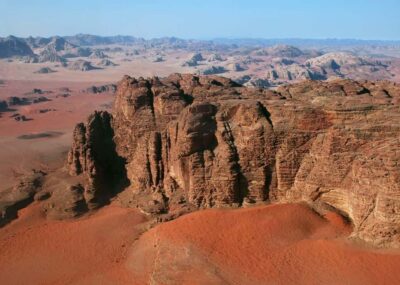
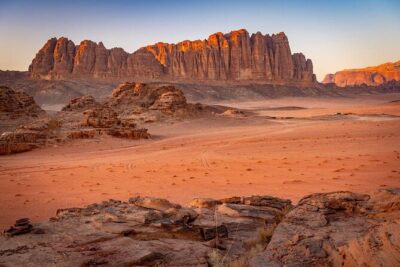
2-Day Petra, Wadi Rum and Dead Sea Tour from Amman
Read our review →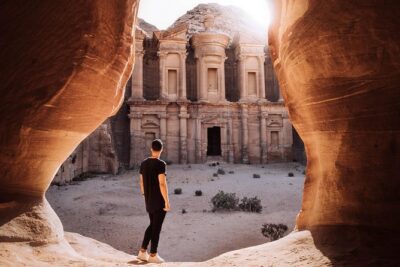
3-Day Private Tour from Amman: Petra, Wadi Rum, Dana, Aqaba, and Dead Sea
Read our review →
Browse the lists this tour appears in