Reviewed · AMMAN TOURS
The Ultimate Jordan Experience – 8 Full Days Private Tour
Jordan packs Roman ruins, Nabataean tombs, Crusader castles, desert silence, wildlife reserves, and the lowest point on earth into one compact country. This eight-day private tour gives you a driver, lodging, meals, and a broad route from Amman to Petra, Aqaba, Wadi Rum, and back.
I like the range: you get major sights such as Petra and Jerash, but also less familiar places such as Al Ma’wa, Dana, Shaumari, and Azraq. I also like the private format, since you can adjust the pace and add activities on the free half-day in Wadi Rum.
The main drawback is the pace. Several days cover long distances and many stops, while entrance fees are extra. You will see a great deal, but this is not a slow, stay-in-one-place holiday.
Key points of the Jordan route
- A private car and English-speaking driver: Your group travels alone, with room for flexible timing and local guidance along the road.
- Petra with a licensed local guide: Four hours are set aside for Jordan’s most famous archaeological site.
- A two-hour sunset jeep safari in Wadi Rum: The safari is included, with the desert timed for late afternoon and sunset.
- Wildlife beyond the usual sightseeing: Al Ma’wa, Shaumari Nature Reserve, and Azraq Wetland Reserve add animals, birds, and conservation work to the route.
- Seven nights of accommodation: Six breakfasts, lunch, dinner, and selected meals are included, though not every meal.
- Jordan’s castles and ancient towns: Jerash, Ajloun, Karak, Shobak, Madaba, and the eastern desert castles bring different periods of Jordanian history into one trip.
Amman begins with blue tile and ancient stone

Your first day starts at 8:00 a.m. in Amman. The King Abdullah Mosque, often called the Blue Mosque, makes a striking opening stop. Its great blue mosaic dome covers a prayer hall that can hold about 3,000 worshippers.
Dress matters here. Men need long trousers. Women must cover their heads, arms, and legs. The mosque visit is brief, about 30 minutes, so it works well as an introduction rather than a major part of the day.
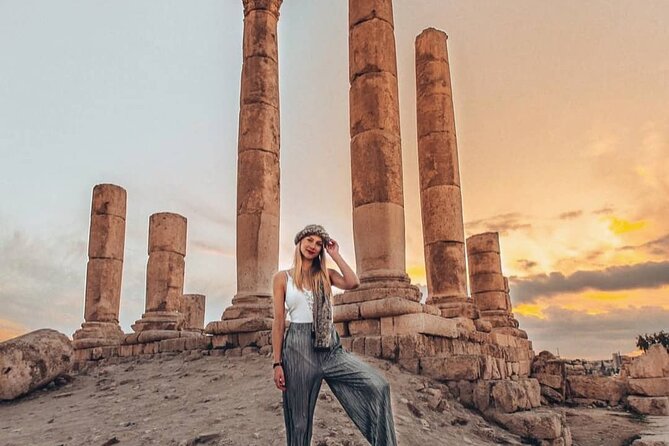
From there, you head uphill to the Citadel. This is where Amman’s many layers become easy to read. The site includes the Temple of Hercules, a Byzantine church, and the Umayyad Palace, with views over the modern city below.
Give yourself the full hour. The Citadel is exposed, so sun protection helps. Admission is not included, and the same applies to most archaeological sites throughout the tour.
The Roman Theatre offers a sharp contrast. Built for about 5,000 spectators, it remains one of Amman’s clearest Roman landmarks. The published schedule gives it only a very short stop, so confirm the timing if you want to climb the seating or spend time in the surrounding downtown area.
The Jordan Museum rounds out the day with objects and displays covering Jordan’s cultural story. It is a useful counterpoint to the open-air ruins because it gives you context indoors. Plan about an hour, with admission again paid separately.
A few more Amman trips to weigh up
- Amman: Petra, Wadi Rum, and Dead Sea 2-Day Tour
★ 4.9 · 1,173 reviews - 2-Day Tour: Petra, Wadi Rum, and Dead Sea from Amman
★ 5.0 · 1,141 reviews - From Amman: Petra & Wadi Rum Private or group Day Tour
★ 4.9 · 750 reviews
Jerash, Ajloun, and Al Ma’wa make a strong second day
Jerash is one of the tour’s major highlights. Its ceremonial gates, long colonnaded streets, temples, theatres, and public spaces show why it was once a major imperial center.
Two hours is enough for a solid visit, though you may want more if you enjoy ancient architecture. The ruins are open and sun-baked. Bring a hat, sunscreen, and water, especially in warm weather.
Ajloun Castle changes the mood. Built between 1184 and 1188 by a general of Saladin, it occupies a strategic position on Mount Auf at about 1,250 meters. From the castle, you can look toward the Jordan Valley and the routes that made this area important during the wars with the Crusaders.
The final stop, Al Ma’wa for Nature and Wildlife, gives this day a purpose beyond old stones. The sanctuary covers 140 hectares, with large animal enclosures spread across part of the grounds. It provides shelter for rescued animals, including African lions, Bengal tigers, Syrian brown bears, and Asian black bears.
This is not a conventional zoo stop. Al Ma’wa exists in part because Jordan sits on routes used in illegal wildlife trafficking. The visit adds a modern conservation story to the ancient sites around Jerash.
Three hours is a substantial amount of time here, so this day suits anyone who wants a mix of archaeology and animal welfare. Entrance is not included.
The Dead Sea, Mount Nebo, and Madaba
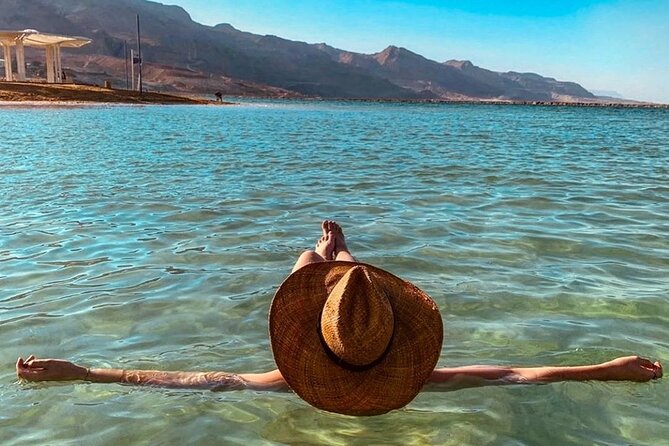
The Dead Sea is one of Jordan’s most memorable physical experiences. At about 428 meters below sea level, it is the lowest point on earth. The water is so salty that you float with little effort.
You need to know one practical detail: the shore access and basic facilities are at private beaches, with entry fees starting at 25 Jordanian dinars per person. That fee covers access to facilities such as toilets and showers, but it is not part of the tour price.
Avoid shaving immediately before the visit, protect your eyes, and do not treat the water like an ordinary swimming pool. The experience is short, unusual, and best enjoyed without trying to stay in too long.
Mount Nebo follows. From this ridge, about 817 meters above sea level, you can look toward the Jordan Valley and the Holy Land. Jericho is usually visible, while Jerusalem may appear on a very clear day.
There is a Lebanese-style restaurant at Mount Nebo, giving you a convenient lunch option. Admission is extra.
Madaba is more intimate. This friendly town is known for Byzantine mosaics, churches, archaeological sites, and a walkable center lined with shops and marketplaces. Its Christian, Muslim, Catholic, and Greek Orthodox communities add an important human dimension to the history.
Two hours lets you see key sights without turning the visit into a marathon. Madaba also gives you a chance to eat in town, with Jordanian food and international choices available.
Karak and Shobak reveal Jordan’s fortress country
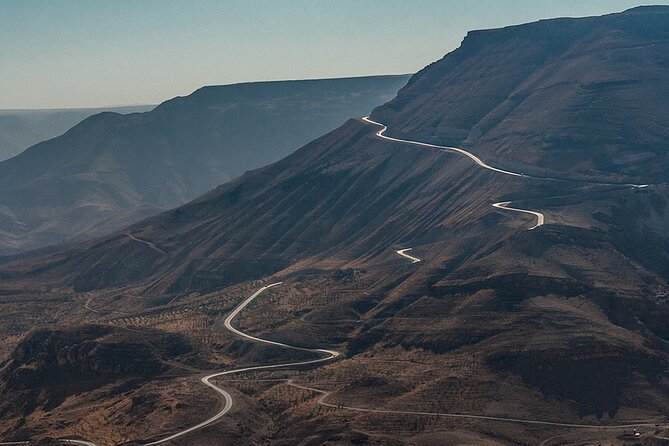
Day four moves south through a string of scenic and historic stops. A quick viewpoint at Mujib Dam breaks up the drive. The dam is mainly used for irrigation, but the stop is about the setting rather than a long visit.
Karak Castle is the day’s main historical stop. This 12th-century Crusader stronghold sits in central Jordan and is one of the largest castles in the Levant. Allow about 90 minutes.
Karak can feel rougher and less polished than Petra, which is part of its appeal. You explore thick stone walls, passages, and rooms while trying to picture the castle as a military position rather than a picturesque ruin.
The route then passes near Dana and the Wadi Dana area. The village sits on the edge of a large canyon and looks toward Wadi Araba. This is Jordan’s premier nature-reserve country, with ecotourism facilities in the Dana Biosphere Reserve.
Shobak Castle is another Crusader fortress, built in 1115 under King Baldwin. Its remote mountain setting gives it a different character from Karak. Inside, you can find churches, ruins, a watchtower, catacombs, Christian carvings, Islamic tablets, and a secret passage leading toward a spring.
The site receives about an hour. Wear shoes with a firm sole, since old fortifications can mean uneven footing. Entrance fees are extra at both castles.
Same country, a completely different kind of day:
- From Amman: Petra and Wadi rum Full day Tour
★ 5.0 · 538 reviews - 2-Day Petra, Wadi Rum and Dead Sea Tour from Amman
★ 5.0 · 467 reviews - 3-Day Private Tour from Amman: Petra, Wadi Rum, Dana, Aqaba, and Dead Sea
★ 5.0 · 425 reviews - Petra Full-Day Private Tour from Amman
★ 4.9 · 392 reviews
Petra deserves the full four hours
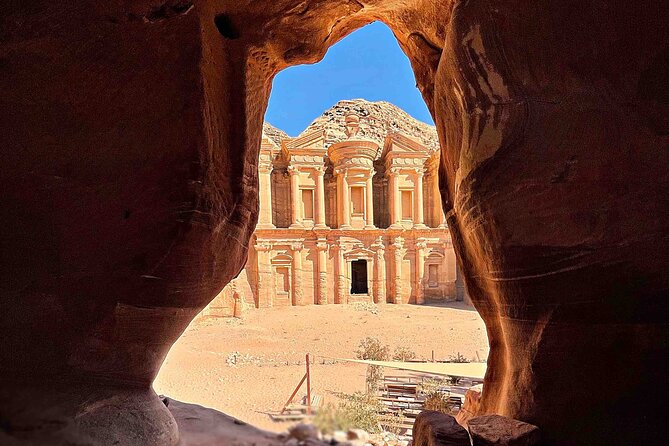
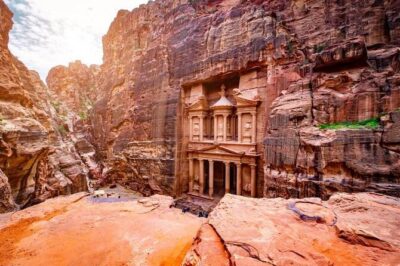
Petra is the reason many people come to Jordan, and the tour gives it a proper half-day. The ancient Nabataean city was built more than 2,000 years ago, using rock-cut architecture and sophisticated water systems.
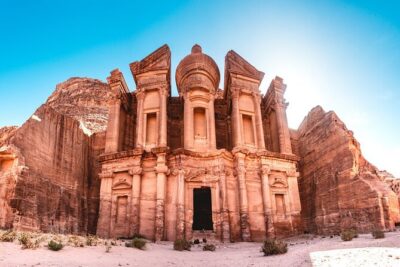
Your approach begins with an easy one-kilometer walk through steep rock cliffs. The route opens at the Treasury, Petra’s famous carved facade, but do not stop there. The site also includes hundreds of tombs, a Roman-style theatre, and the Nabataean Monastery.
A licensed local guide is included at Petra. This matters because the site’s meaning is easy to miss when you only photograph the Treasury. A guide can help connect the tombs, trading routes, water engineering, and religious buildings into a clear story.
Four hours is enough for the main route, but Petra is physically demanding in the sun. Wear comfortable shoes, use a hat, and carry plenty of drinking water. Admission is not included, so the Jordan Pass is worth considering.
After Petra, you continue to Aqaba for an overnight stay. The schedule gives you about an hour in the beach city, which is enough for a brief look but not a full Red Sea holiday. If you want substantial time for water activities, this itinerary may feel short in Aqaba.
Wadi Rum brings the desert at sunset
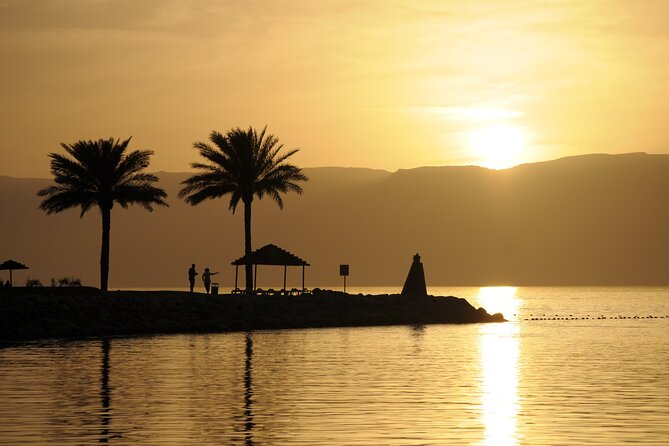
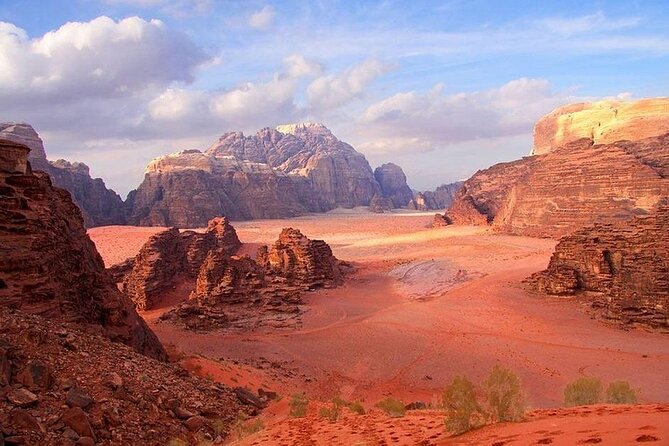
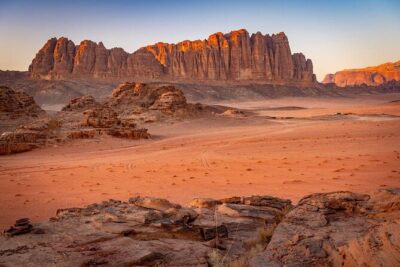
The next afternoon, you transfer to Wadi Rum Protected Area. The timing is deliberate: you aim to arrive before sunset for the included two-hour jeep safari.
This is one of the tour’s best-value inclusions because the desert excursion is already built into the package. A jeep lets you cover more ground than walking, while the late timing gives you changing light over the red sand and rock formations.
You stay overnight in the desert as part of the seven-night accommodation plan. The exact lodging style is not specified, so ask what type of camp or desert accommodation is being arranged before booking if that matters to you.
Day seven allows a half-day of free time in Wadi Rum before returning to Amman by noon. You can request extra activities for an added fee, including a hike to a mountain viewpoint, horse riding, camel riding, a four-hour jeep tour, or a self-guided walk in one of the canyons.
This flexible block is useful. You can rest after Petra and the sunset safari, or turn it into an activity day. Extra charges apply, so decide in advance if you want more than the included jeep tour.
Shaumari and Azraq add a different final day
The last day heads east from Amman to two nature reserves and the desert castles. Shaumari Nature Reserve began as a breeding center for endangered or locally extinct wildlife. Today, the 22-square-kilometer reserve protects animals such as Arabian oryx, ostriches, onagers, and gazelles.
A jeep safari is available here, but it is not included. If you want it, budget separately. The safari offers a closer look at the animals and explains how desert plants were used in earlier times.
Azraq Wetland Reserve is a surprising sight in eastern Jordan. Established in 1978, it covers 12 square kilometers and provides a stop for migratory birds.
The marsh trail uses a boardwalk through wet and dry areas. It leads to a viewing platform above the springs and then crosses an old black basalt wall, probably built during the Umayyad period. A bird hide made from local mud and straw gives you a place to watch for migratory species.
Do not expect a large wetland on the scale of a major international bird sanctuary. The reserve has faced serious water pressure, but its springs and bird habitat still make it a worthwhile stop for anyone interested in Jordan beyond its famous ruins.
Eastern desert castles close the circle
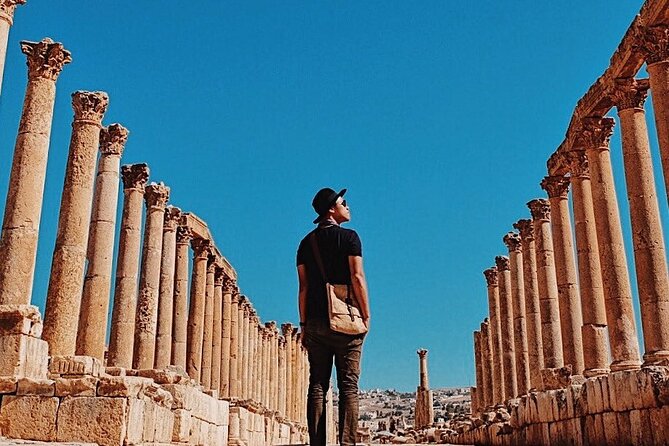
Qasr al-Harraneh, also written Qasr Kharana or Qasr Al-Harranah, is listed twice in the schedule under slightly different spellings. It appears to be the same desert castle, so confirm the final plan with the operator rather than assuming two separate sites.
The building dates from the early eighth century and is linked to the Umayyad period. Its reception hall and hammam once carried figurative murals, showing a side of early Islamic architecture that feels quite different from the Roman ruins in Jerash.
Despite its name, the purpose of the building is not certain. It may have served as a residence, resting place, or administrative site rather than a true military fortress. The lack of a nearby water source also makes the caravanserai theory less straightforward.
The listed timing gives 45 minutes for one entry and an additional hour for the repeated description. Clarify this point before departure, since the route may include only one visit. Admission is extra.
What the $1,260 price really covers
At $1,260 per person, the value depends on the size of your group and how much you would otherwise spend arranging transport between scattered sites. The package includes seven nights of accommodation, six breakfasts, lunch, dinner, some additional meals, private transportation, an English-speaking driver, a Petra guide, and the two-hour Wadi Rum sunset safari.
That is a substantial bundle for a route covering nearly every major region of Jordan. Private transport matters here because public transport does not connect all these castles, reserves, viewpoints, and desert sites in a simple way.
The weak point is that entrance fees are excluded. Petra, Jerash, the Citadel, Karak, Shobak, Mount Nebo, the museum, nature reserves, and other attractions can add up. The operator recommends purchasing the Jordan Pass, so compare its cost with your planned admissions before you go.
Meals also require attention. Six breakfasts are specified, along with lunch, dinner, and some meals, but not every meal. Ask for the exact meal schedule and accommodation details so the price does not surprise you later.
Who will enjoy this private Jordan tour
This suits you if you want Jordan’s major sights but also care about wildlife, castles, and less familiar places. It is especially useful for a family or small group that prefers its own car and wants the option to adjust timing.
The private format also gives you a direct point of contact. Diya is associated with planning and customizing trips, while drivers named Yousuf or Yusuf have been praised for safe driving, friendly company, and practical help along the route. Confirm who will accompany your group, since names and assignments can change.
The schedule is less suited to anyone who wants long afternoons in cafes, extended time at the Dead Sea, or several leisurely days in Aqaba. It is a power-packed route, with driving, walking, and frequent changes of scenery.
Free cancellation is available if you cancel at least 24 hours before the local start time. Changes made inside that window are not accepted, and the payment is not refunded.
Should you book it?
Book this tour if you want one organized Jordan itinerary with private transport, Petra guiding, desert adventure, and seven nights of lodging already arranged. The strongest reasons are the range of stops, the flexibility of a private car, and the inclusion of places that many short Jordan trips skip.
Before paying, confirm the hotel and camp names, the precise meal plan, all entrance costs, the duplicate Qasr al-Harraneh entry, and the driver assigned to your group. If you are comfortable with a busy schedule and extra admission fees, this is a strong way to see Jordan in eight days.
FAQ
Where does the tour start and finish?
The tour starts in Amman, Jordan, at 8:00 a.m., and ends back at the meeting point in Amman.
How long is the tour?
The experience lasts approximately eight days and includes seven nights of accommodation.
Is transportation private?
Yes. The tour includes private transportation and an English-speaking driver. Only your group participates in the private activity.
Is a guide included at Petra?
Yes. A licensed local guide in Petra is included, and the guide can speak any language according to the tour details.
Is the Wadi Rum jeep safari included?
Yes. A two-hour sunset safari in Wadi Rum is included. Additional Wadi Rum activities, such as a longer jeep tour, camel ride, horse ride, hike, or canyon walk, cost extra.
Are entrance fees included?
No. Entrance fees for sites and activities are not included. The tour recommends purchasing the Jordan Pass.
Which meals are included?
The package includes six breakfasts, lunch, dinner, and some additional meals. Meals not included with the accommodation must be paid for separately.
Is the Dead Sea beach access included?
No. Access to a private beach and facilities such as toilets and showers requires a separate fee, starting at 25 Jordanian dinars per person.
Can I cancel for a refund?
Yes. You can cancel at least 24 hours before the experience start time for a full refund. Cancellations or changes made less than 24 hours before the start are not accepted.
Just added around Amman
- Private Tour: Jerash and Umm Qais Day Trip from Amman★ 4.0 · 3 reviews
- From Amman/Airport: 3-Night Private Jordan Special Tour★ 5.0 · 3 reviews
- From Amman | Dead sea and Petra in one day | Admission Fees Included★ 5.0 · 3 reviews
- Dead Sea & Jerash Full-Day Private Tour from Amman or Airport★ 5.0 · 3 reviews
- Private Guided Umm Quais and Jerash tour with lunch★ 5.0 · 3 reviews
- 4-Days tour : Jerash, Amman, Petra ,Wadi-rum& Dead-sea.★ 5.0 · 3 reviews
- Private Half-Day Ma’in Waterfalls and Hot Springs Tour from Amman★ 5.0 · 3 reviews
- Private Tour: Full Day Trip of Jerash, Umm Qais, and Pella from Amman★ 4.5 · 3 reviews
Amman Tours, compared.
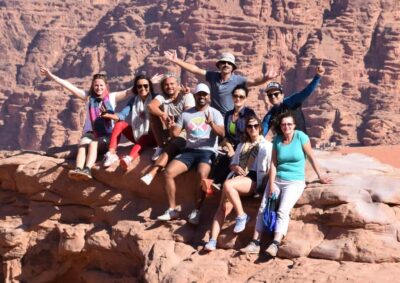
2-Day Tour: Petra, Wadi Rum, and Dead Sea from Amman
Read our review →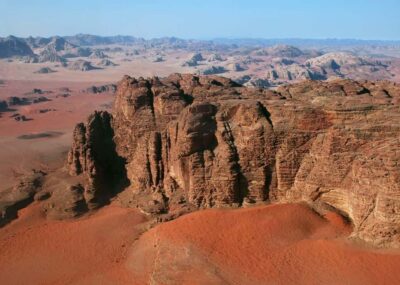
2-Day Petra, Wadi Rum and Dead Sea Tour from Amman
Read our review →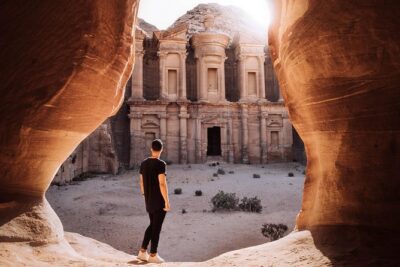
3-Day Private Tour from Amman: Petra, Wadi Rum, Dana, Aqaba, and Dead Sea
Read our review →